An international collaboration of researchers from the Deep Carbon Observatory (DCO) has made several important discoveries, including how much and what kinds of life exist in the Earth’s deep subsurface. Drilling 1.55 miles (2.5 km) into the seafloor, and sampling microbes from continental mines and boreholes more than 3.1 miles …
Read More »Study: Newborns with Vitamin D Deficiency Have Higher Risk of Later Schizophrenia
A study published in the December 6, 2018 issue of the journal Scientific Reports found newborns with vitamin D deficiency had a 44% increased risk of being diagnosed with schizophrenia as adults compared to those with normal vitamin D levels. Newborns with vitamin D deficiency have an increased risk of …
Read More »Using Gold Nanoparticles to Rapidly Detect Cancer DNA
Using as little as 1 picogram of purified DNA sample (think 2.5 trillion times lighter than a penny), scientists at the University of Brisbane have developed a method that permits the swift detection of cancer DNA in a patient sample of cell-free DNA, which circulates systemically. These researchers took advantage …
Read More »Voyager 2 Reaches Interstellar Space
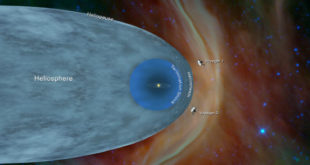
Forty-one years after it launched into space, NASA’s Voyager 2 spacecraft has crossed the outer edge of the heliosphere. Called the heliopause, this boundary is where the tenuous, hot solar wind meets the cold, dense interstellar medium. Voyager 2’s twin probe, Voyager 1, crossed this boundary in 2012, but Voyager …
Read More »OSIRIS-REx Finds Water-Bearing Minerals on Asteroid Bennu
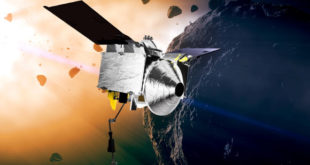
New data from two instruments on NASA’s OSIRIS-REx spacecraft — the OSIRIS-REx Visible and Infrared Spectrometer (OVIRS) and the OSIRIS-REx Thermal Emissions Spectrometer (OTES) — reveal the presence of hydroxyls, molecules that contain oxygen and hydrogen atoms bonded together, on the surface of asteroid Bennu. According to the mission science …
Read More »Scientists Turn Wasp Venom Into Potentially Groundbreaking Antibiotic
Decades of antibiotic overuse have bread new generations of super-bacteria that can go on living even when hit with the most potent drugs we’ve got. Scientists are scrambling to discover new antibiotic compounds, but it’s slow going. Oh, there are plenty of chemicals that will kill bacteria, but many of …
Read More »Early Jurassic Ichthyosaur Was Warm-Blooded, Had Blubber and Camouflage, Well-Preserved Soft Tissues Show
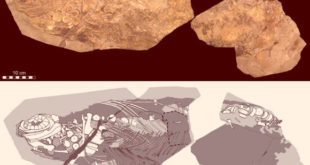
An international team of paleontologists has found the exceptionally preserved remains of a Stenopterygius ichthyosaur that lived 180 million years ago (Early Jurassic epoch). The fossil is so well-preserved that its soft-tissues retain some of their original flexibility. Molecular and microstructural analyses of the fossil have revealed that this creature …
Read More »Lifelong Aerobic Exercise May Help Keep Body Young, Says New Study
In an analysis of septuagenarians who have been exercising for decades, researchers from Ball State University found that they have heart and lung capacities and muscle fitness like healthy people in their early 40’s. The findings were published in the Journal of Applied Physiology. Exercising on a regular basis over …
Read More »InSight Records Sound of Wind on Mars
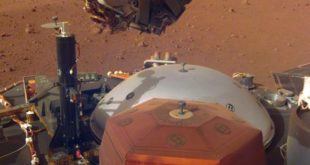
On December 1, 2018, NASA’s InSight lander captured a haunting low rumble caused by vibrations from the Martian wind, estimated to be blowing between 10 to 15 mph (5-7 m/sec) from northwest to southeast. The wind was consistent with the direction of dust devil streaks in the landing area, which …
Read More »Curiosity’s Newly Dust-Free Penny Shows Strength of Martian Winds
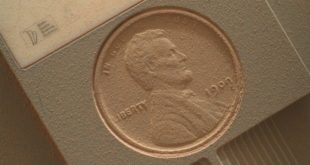
We often hear about the dust storms and wind on Mars, but it’s hard to visualize conditions on the ground when the planet’s only inhabitants are robots. Today, the Curiosity rover has provided a handy visual example of how the wind blows on the red planet. The record consists of …
Read More »
#Bizwhiznetwork.com Innovation ΛI |Technology News