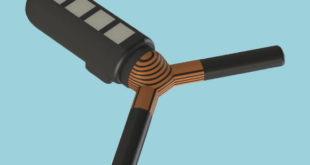
A research team led by MIT scientists has developed an ingestible capsule that can be controlled using Bluetooth, a widely adopted wireless protocol. Manufactured using 3D-printing technology, the capsule could be deployed to deliver drugs to treat a variety of diseases. It could also be designed to sense infections, allergic …
Read More »Virgin Galactic SpaceShipTwo Reaches Space for the First Time
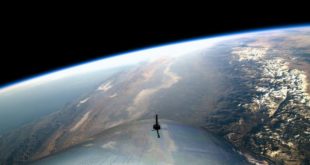
Virgin Galactic has been operating for a long time compared with other private spaceflight companies, but it had never actually flown in space before now. Well, the definition of space is somewhat hazy, but Virgin’s pilots are astronauts by at least one definition. This marks the highest altitude its spaceliner has …
Read More »Scientists Detect Hot Neptune Losing Atmosphere at an Extraordinary Rate
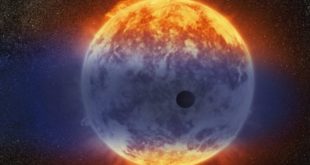
There aren’t a lot of Hot Neptunes in the galaxy, and it’s not entirely clear why. A Hot Neptune is, as the name implies, a Neptune-sized planet orbiting within 1 AU of its host star. While we’ve definitely detected a few of them, there simply aren’t as many as we …
Read More »NASA’s New Horizons Spacecraft Captures New Images of Ultima Thule
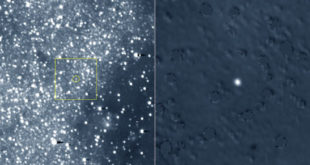
NASA’s New Horizons spacecraft has returned new images captured on approach to its next flyby target, the Kuiper Belt object 2014 MU69, also known as Ultima Thule. This composite image of Ultima Thule was taken just 33 hours before the December 2 course-correction maneuver that fine-tuned New Horizons’ trajectory for …
Read More »Did a Supernova Kill Earth’s Megafauna 2.5 Million Years Ago?
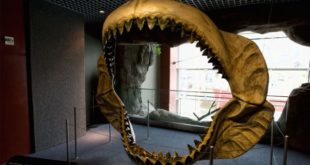
You may think there are some big animals on Earth today, but this is nothing compared with the Pliocene period a few million years ago. So-called “megafauna” like the 50-foot megalodon shark and giant ground sloth were common. And suddenly, they weren’t. Why? A new study points the finger at …
Read More »Nearby Supernova Explosions Triggered End-Pliocene Marine Mass Extinction, Researchers Say
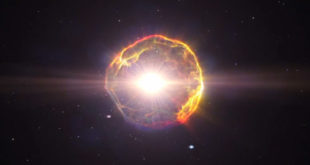
Approximately 2.6 million years ago (Pliocene epoch), a tsunami of cosmic energy from a massive supernova or a series of them about 150 light-years away reached Earth and pummeled the atmosphere, touching off climate change and triggering the mass extinction of large marine animals, according to University of Kansas Professor …
Read More »Researchers Find Oldest Known Plant Virus
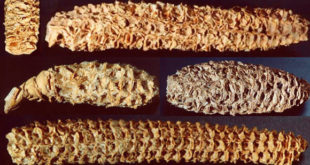
Scientists studying ancient corncobs found at Antelope House, an Ancestral Puebloan ruin located at Canyon de Chelly National Monument, Arizona, have discovered a 1,000-year-old virus, the oldest plant virus ever reported. The discovery is described in a paper this week in the Journal of Virology. Examining 1,000-year-old corncobs from an …
Read More »Scientists Repurpose Wasp Venom Peptides to Fight Drug-Resistant Bacteria
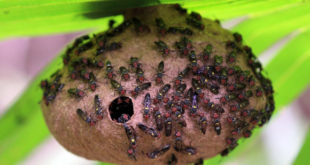
After performing an analysis of the antimicrobial properties of a peptide found in the venom of Polybia paulista, a species of South American social wasp, a team of researchers at MIT has engineered several variants of the peptide that are potent against bacteria but nontoxic to human cells. In a …
Read More »Dwarf Planet Ceres Has Carbon-Rich Surface, Study Suggests
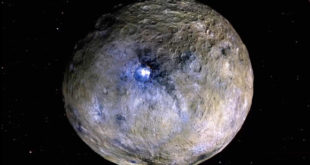
The surface of the dwarf planet Ceres may contain several times the concentration of carbon than is present in the most carbon-rich, primitive meteorites found on Earth, according to a new study published in the journal Nature Astronomy. This false-color image shows the dwarf planet Ceres. Image credit: NASA / …
Read More »NASA releases first sounds ever caught on Mars
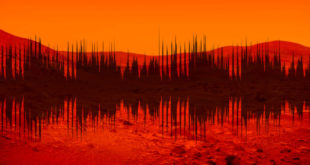
< img src=" https://assets.rbl.ms/18980705/origin.jpg" >. The audio recorded by the lander is of Martian winds blowing at an estimated 10 to 15 miles per hour. It was taken by the InSight Mars lander, which is developed to help researchers learn more about the formation of rocky worlds, and possibly discover …
Read More »
#Bizwhiznetwork.com Innovation ΛI |Technology News