Science

What Was Universe Like before Big Bang?

Professor Avi Loeb of the Harvard-Smithsonian Center for Astrophysics and colleagues have proposed a new test for inflation, the theory that our Universe dramatically expanded in size in a fleeting fraction of a second right after the Big Bang. The team’s paper was published in the journal Physical Review Letters. …

Read More »

Study: Male and Female Bees Frequent Different Flowers

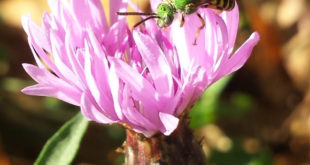
For scores of wild bee species, females and males visit very different flowers for food, according to a new study published in the journal PLoS ONE. The bicolored striped-sweat bee (Agapostemon virescens), a male, on spotted knapweed in the Rutgers-owned Hutcheson Memorial Forest in Franklin Township, Somerset County. Image credit: …

Read More »

Pluto’s Atmosphere Predicted to Collapse by 2030

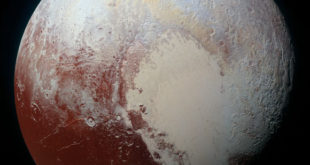
The tenuous nitrogen atmosphere of the dwarf planet Pluto is predicted to ultimately collapse and freeze over. This high-resolution image of Pluto was taken by New Horizons on July 14, 2015. Pluto’s surface sports a remarkable range of subtle colors, enhanced in this view to a rainbow of pale blues, …

Read More »

Chinese Skullcap Genome Sequenced

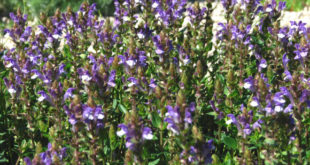
A team of geneticists from the John Innes Centre and the Chinese Academy of Sciences has produced the first high-quality genomic sequence for the Chinese skullcap (Scutellaria baicalensis), one of the 50 fundamental herbs used in Traditional Chinese Medicine. The Chinese skullcap (Scutellaria baicalensis). Image credit: Andrey Korzun / CC …

Read More »

Two New Species of White-Eyes Discovered in Indonesia

Two new species of the bird genus Zosterops (white-eyes) have been discovered in the forests of the Wakatobi Archipelago, Sulawesi, Indonesia. The Wakatobi white-eye. Image credit: Seán Kelly. White-eyes as a group have spread and speciated more rapidly than any other birds. They are adaptable, feeding on a wide variety …

Read More »

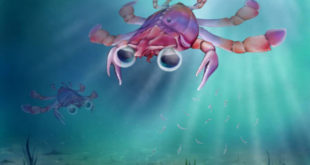
Meet Callichimaera perplexa, Strangest Crab that Has Ever Lived

An international team of paleontologists has found the exceptionally preserved fossilized remains of an enigmatic new type of crab, Callichimaera perplexa, which lived approximately 95 million years ago (mid-Cretaceous period) in what are now Colombia and the United States. Callichimaera perplexa. Image credit: Elissa Martin, Yale Peabody Museum of Natural …

Read More »
Bizwhiznetwork Consultation