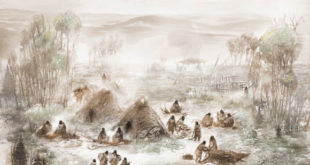
Northeastern Siberia has been inhabited by humans for more than 40,000 years but its deep population history remains poorly understood. In a new study, published in the journal Nature, researchers investigated the population history of the region through an analysis of 34 ancient human genomes that date to between 31,000 …
Read More »Metabolic Abnormalities More Prevalent Among Irregular Sleepers, Study Finds
A study published in the journal Diabetes Care has found that not sticking to a regular bedtime and wakeup schedule can put a person at higher risk for obesity, high cholesterol and other metabolic disorders. Increased variability in sleep duration and timing was associated with higher prevalence and incidence of …
Read More »New Herbivorous Dinosaur Species Identified in Australia: Fostoria dhimbangunmal
A new species of two-legged iguanodontian dinosaur has been identified from fossils discovered three decades ago in an opal mine in Australia. A paper describing the new species was published this week in the Journal of Vertebrate Paleontology. An artist’s reconstruction of Fostoria dhimbangunmal. Image credit: James Kuether. The new …
Read More »Astronomers Image Cold Gas Ring Around Our Galaxy’s Central Black Hole
Scientists recently produced the first images of a giant black hole in a distant galaxy, but there’s a supermassive black hole much closer to home. In the center of our own galaxy lurks an invisible monster, the gravity of which may help hold the Milky Way together. We can’t …
Read More »Study: Moderate to Heavy Coffee Consumption Doesn’t Increase Arterial Stiffness
Arteries carry blood containing oxygen and nutrients from your heart to the rest of your body. If they become stiff, it can increase the workload on the heart and increase a person’s chance of having a heart attack or stroke. New research from Queen Mary University of London and the …
Read More »Honeybees May Be Capable of Connecting Symbols to Numbers, Says New Study
A team of scientists from RMIT University, Monash University and the University of Toulouse III has trained honeybees (Apis mellifera) to match a character to a specific quantity, revealing the insects are able to learn that a symbol represents a numerical amount. A honeybee. Image credit: Padmanemi. Studies have shown …
Read More »Feathers Arose 80 Million Years before Birds, Scientists Say
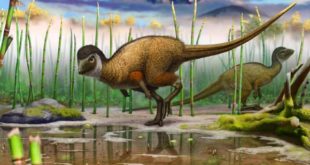
According to a new review paper published in the journal Trends in Ecology Evolution, feathers arose 250-230 million years ago, during the Early Triassic, when life was recovering from the devastating end-Permian mass extinction. Reconstruction of Kulindadromeus zabaikalicus. Image credit: Andrey Atuchin. It is shocking to realize that feathers originated …
Read More »Why Giant Beavers Went Extinct 10,000 Years Ago
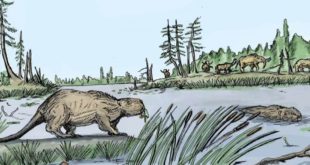
Giant beavers (members of the genus Castoroides) inhabited North America throughout the mid- to late Pleistocene. They went extinct along with dozens of other megafaunal species at the end of the last Ice Age, approximately 10,000 years ago. Now a team of researchers in Canada has uncovered a possible reason …
Read More »Researchers Find 2.6-Million-Year-Old Oldowan Tools in Ethiopia
An international team of scientists has unearthed a collection of 2.6-million-year-old systematically flaked stone tools at the site of Bokol Dora 1 (BD1) in the Ledi-Geraru area, Ethiopia. Previously, the oldest evidence for systematic stone tool production and use was 2.58 million to 2.55 million years ago. The team’s work, …
Read More »NASA Installs Mars 2020 Rover’s HD Eyes
NASA’s Curiosity rover has been a smashing success since its landing on Mars in 2012. So, it’s no surprise the upcoming Mars 2020 rover will use a very similar design. The team is currently assembling the rover, which is scheduled for a July 2020 launch, and it just got …
Read More »
#Bizwhiznetwork.com Innovation ΛI |Technology News