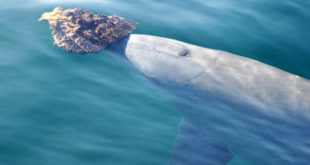
According to new research, published in the published in the Proceedings of the Royal Society B, Indo-Pacific bottlenose dolphins (Tursiops aduncus) living in Shark Bay, a World Heritage Site in the Gascoyne region of Western Australia, form close friendships with other dolphins that have a common interest. An Indo-Pacific bottlenose …
Read More »Giant Cambrian Trilobite Species Unearthed in Australia
Paleontologists have unearthed fossils of a giant trilobite species that inhabited Australian waters approximately 500 million years ago (Cambrian period). An artist’s impression of Redlichia rex on the Cambrian seafloor. Image credit: Katrina Kenny. Trilobites are a group of extinct marine arthropods that resemble modern-day horseshoe crabs and are related …
Read More »NASA Needs $20 Billion in Additional Funding to Reach Moon by 2024
NASA has been talking about going back to the moon for a long time, but plans have been accelerated in the last few years. Under the current administration, NASA has been told to push up its timeline and get a crewed mission to the moon by 2024 instead of …
Read More »Having Artificial Light On While Sleeping Increases Risk of Weight Gain and Obesity in Women
Exposure to artificial light while sleeping may be a risk factor for weight gain and development of overweight or obesity, says a new study from the National Institute of Environmental Health Sciences (NIEHS). Sleeping with a TV or artificial light on may be a risk factor for gaining weight or …
Read More »Researchers Discover Two New Species of Shrewlike Rats in Philippines
Two new species of shrewlike rats have been discovered living in the montane and mossy forests of Luzon Island, Philippines. The Mingan shrew-rat (Rhynchomys mingan). Image credit: Velizar Simeonovski, Field Museum. The two newfound species belong to Rhynchomys (also known as the tweezer-beaked hopping rats), a genus of unusual Old …
Read More »Study: Pterosaurs Had Remarkable Ability to Fly from Birth
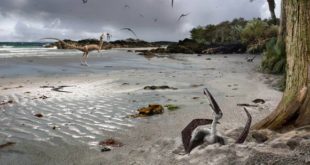
Pterosaurs were winged flying reptiles that lived at the same time as dinosaurs, between 210 million and 65 million years ago. Previously, they were thought to only be able to take to the air once they had grown to almost full size, just like birds or bats. This assumption was …
Read More »Scientists Propose New Candidate for Dark Matter
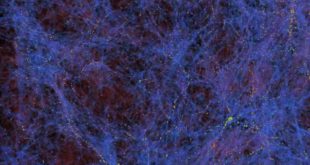
Scientists have observed many distant objects with instruments like Hubble and the upcoming James Webb Space Telescope, but everything we’ve seen represents all those stars, nebulae, and galaxies are just the tip of an unfathomable iceberg. Only about 15 percent of the universe is made up of the matter …
Read More »Hubble Spots Sodium Chloride on Jupiter’s Moon Europa
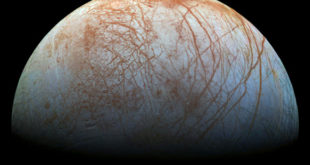
Astronomers using the NASA/ESA Hubble Space Telescope have discovered that the yellow color visible on portions of the surface of Europa, the second Galilean satellite outward from Jupiter, is actually sodium chloride (table salt). The discovery, reported in the journal Science Advances, suggests that Europa’s underground ocean may chemically resemble …
Read More »Scientists Sequence Spider Glue Genes
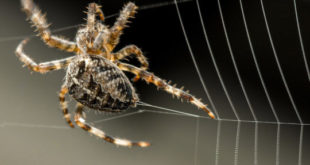
Researchers have published the first-ever complete sequences of two genes that allow spiders to produce glue, a modified version of silk that keeps a spider’s prey stuck in its web. Droplets of water and glue on spider silk. Image credit: Hans Braxmeier. Spiders use a suite of remarkable silk and …
Read More »Dark Monopoles: Theoretical Physicists Propose New Candidate for Dark Matter
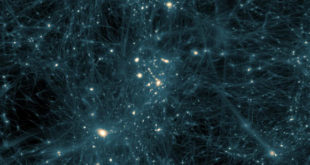
Professor John Terning and Dr. Christopher Verhaaren from the University of California, Davis, have a new candidate for dark matter — a dark monopole — and a possible way to detect it. No one knows what dark matter is, but this invisible form of matter makes up roughly a quarter …
Read More »
#Bizwhiznetwork.com Innovation ΛI |Technology News