Science

NASA Confirms Voyager 2 Has Left the Solar System
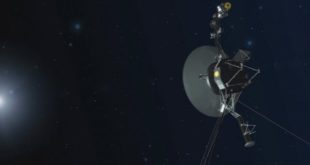
Humanity first left the solar system in 2012 when the Voyager 1 probe passed into interstellar space decades after leaving the planets behind. Now, there’s a second spacecraft beyond the limits of our solar system: Voyager 2. Luckily, Voyager 2’s instruments are in somewhat better shape than Voyager 1’s, so …

Read More »

Iberian Neanderthals Used Eagle Talons for Symbolic Purposes

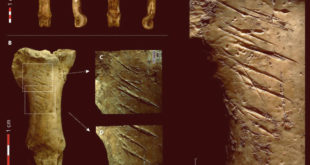
A cut-marked eagle phalange recovered from Foradada Cave in Spain suggests that Iberian Neanderthals used the birds’ talons as bead-like objects. The 39,000-year-old eagle phalange with cut marks from Foradada Cave, Spain: (A) dorsal, medial, plantar, and lateral views of the phalange (from left to right, respectively); (B) detail of …

Read More »

New Type of Fossilization Discovered

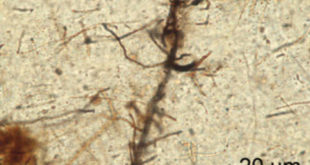
A previously unrecognized mode of fossilization of ancient microbes may explain how some of Earth’s oldest microfossils formed, according to new research. Rasmussen Muhling show that the infiltration of liquid hydrocarbons was responsible for the formation of these filamentous microfossils from the Red Dog Zn-Pb-Ag massive sulfide deposit in the …

Read More »

Plants’ Reaction to Rain is Close to Panic, Study Shows

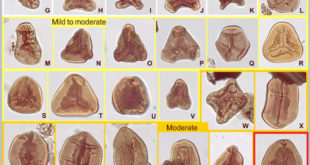
Complex chemical signals are triggered when water lands on a plant to help it prepare for the dangers of rain, according to a new study published in the Proceedings of the National Academy of Sciences. Van Moerkercke et al made the surprising discovery that a plant’s reaction to rain is …

Read More »

Avocado Compound May Help Fight Obesity and Diabetes

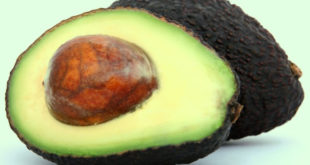
Avocatin B, a fat molecule found only in avocados (Persea americana), can inhibit cellular processes that normally lead to diabetes, according to a study published in the journal Molecular Nutrition and Food Research. Avocatin B is a lipid derived from avocado. Image credit: Robert Owen-Wahl. “Eating avocados alone would likely …

Read More »

Paleontologists Find Fossilized Remains of Trilobite Queues

In a paper published in the journal Scientific Reports, University of Lyon’s Dr. Jean Vannier and colleagues described several fossilized clusters of Ampyx priscus, a species of trilobite that lived 480 million years ago (Ordovician period); the paleontologists interpreted the fossils as a collective behavior related to seasonal reproduction or …

Read More »

Origin of Anatomically Modern Humans Traced to Southern Africa

The earliest ancestors of anatomically modern Homo sapiens emerged in a region south of the Zambezi River in Botswana, Africa, according to a new analysis of modern human’s mitochondrial genomes (mtDNA or mitogenome) from the L0 lineage, the oldest known mtDNA lineage on Earth. Ancient humans. Image credit: sjs.org / …

Read More »
Bizwhiznetwork Consultation