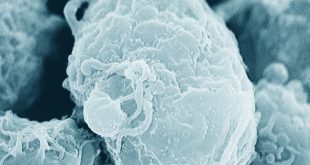
A team of scientists led by the University of Colorado Boulder has discovered that a gene called SLFN11 — which encodes a protein known as Schlafen family member 11, or Schlafen11 — may induce a cellular response against infection by viruses including human immunodeficiency virus-1 (HIV-1). The research is published …
Read More »Scientists Use Human Pluripotent Stem Cells to Regenerate Epicardium
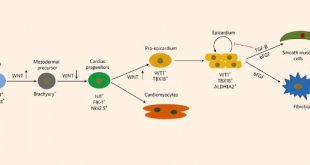
A process using human stem cells can generate heart cells belonging to the external layer, the epicardium, according to an international team of scientists from the Pennsylvania State University, the University of Wisconsin, Madison, Leiden University Medical Center in the Netherlands and AstraZeneca in Sweden. A model highlighting the specification …
Read More »Stem Cell-Based Transplantation Approach Improves Vision in End-Stage Retinal-Degeneration Mice
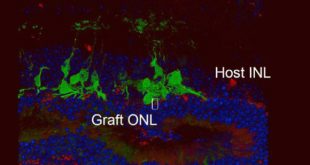
In the Jan. 10 issue of the journal Stem Cell Reports, Dr. Michiko Mandai and colleagues at the RIKEN Center for Developmental Biology in Japan report that transplantation of induced pluripotent stem cell (iPSC)-derived retinal tissue improved vision in a mouse model of end-stage retinal degeneration. 3D observation of contact …
Read More »Up to 76% of World’s Population is Now Overfat, Say Researchers
According to an international team of scientists from New Zealand and Australia, up to 76% of the world’s population is overfat. This amounts to an astonishing 5.5 billion people. Estimated number and percentage of overfat and underfat adults and children worldwide (based on 2014 world population numbers of 7.2 billion). …
Read More »Researchers Develop Novel Method to Repair Teeth using Alzheimer’s Drug Tideglusib
A novel method of stimulating the renewal of living stem cells in tooth pulp using an Alzheimer’s drug called Tideglusib has been discovered by scientists at King’s College London, UK. Tideglusib treatment shows complete repair with vital dental pulp after 6 weeks. Image credit: V.C.M. Neves et al, doi: 10.1038/srep39654. …
Read More »Novel Drug Reduces Spread of Melanoma by 90%
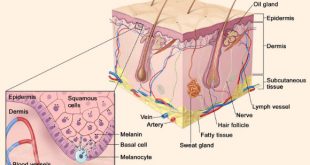
A team of scientists at Michigan State University has discovered that a potential new drug, called CCG-203971, reduces the spread of melanoma cells by up to 90%. The findings are published in the journal Molecular Cancer Therapeutics. Melanoma is a disease in which malignant cells form in melanocytes. Image credit: …
Read More »New Antibiotic to Fight Gonorrhea Developed
A team of researchers at the University of York, UK, has harnessed the therapeutic effects of carbon monoxide-releasing molecules to develop a new antibiotic which could be used to treat gonorrhea, a sexually transmitted disease caused by Neisseria gonorrhoeae bacteria. This illustration depicts a 3D computer-generated image of a number …
Read More »New Experimental Antibiotics Show Promise against MRSA
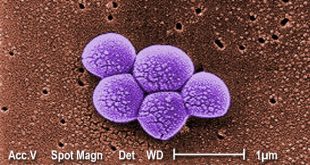
New experimental antibiotics developed by chemists at the University of Connecticut successfully treat methicillin-resistant Staphylococcus aureus (MRSA) infections. The success is due to their strategy, which found a weakness and exploited it in a way the bacteria should have trouble countering. Stephanie M. Reeve et al. identified two plasmid-borne genes …
Read More »First Hologram Video Player to Show Your Organs
A team of researchers in the UK is developing an interactive holographic video created from an MRI or CT scan that can display live footage of internal organs in front of a user where features can be rotated, enlarged, and isolated. Popping in to your local hospital may be much …
Read More »Australian Manuka Honey Has Strong Antibacterial Properties, New Study Shows
Australian manuka honey is at least as powerful against bacteria as the more commonly known New Zealand variety, according to a new study published in the journal PLoS ONE. A researcher with manuka honey in the lab. Image credit: Vanessa Valenzuela Davie. “Honey has been used therapeutically by many cultures …
Read More »
#Bizwhiznetwork.com Innovation ΛI |Technology News