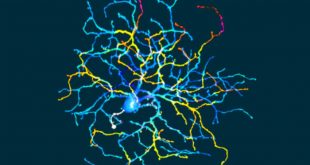
A team of researchers at Northwestern University has discovered a type of retinal ganglion cell that may cause myopia when it dysfunctions. The study is published in the journal Current Biology. This image shows an ON Delayed retinal ganglion cell. Image credit: Adam Mani Gregory W. Schwartz, Northwestern University. This …
Read More »Study: Brain Produces Fructose from Glucose
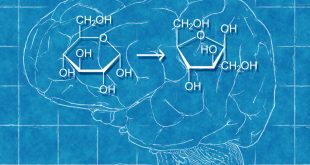
According to a new study by Yale School of Medicine researchers, fructose is converted in the human brain from glucose. The finding, published in the journal JCI Insight, raises questions about fructose’s effects on the brain and eating behavior. Fructose, a simple sugar, is generated in the human brain, according …
Read More »Researchers Find Antimicrobial Substances in Komodo Dragon Blood
A team of researchers at the College of Science at George Mason University has detected 48 antimicrobial peptides in the blood plasma of Komodo dragons (Varanus komodoensis), the largest living lizards. The discovery could lead to the development of new drugs capable of combating antibiotic-resistant bacteria. The Komodo dragon (Varanus …
Read More »Fetal Sex Plays Role in Immunity of Pregnant Women, New Study Finds
Women tend to react with stronger responses to immune challenges while pregnant with girls than with boys, a new study published in the journal Brain, Behavior and Immunity has found. The study by Mitchell et al shows baby’s sex is associated with pregnant women’s immune responses. A team of scientists …
Read More »Vitamin B3 Protects Mice from Glaucoma, Study Finds
Vitamin B3, also known as niacin and nicotinic acid, prevents eye degeneration in glaucoma-prone mice, according to a study published in the Feb. 17 issue of the journal Science. Williams et al show that dietary supplementation with a single molecule (vitamin B3 or NAM) or Nmnat1 gene therapy significantly reduces …
Read More »Vitamin D Protects Against Colds and Flu, New Study Finds
Vitamin D supplementation can help protect against acute respiratory infections including colds and flu, particularly among very deficient individuals, according to a new study published in the journal BMJ. The study by Martineau et al provides the most robust evidence yet that vitamin D has benefits beyond bone and muscle …
Read More »The brains of astronauts change during spaceflight
At the dawn of human spaceflight, we weren’t even sure people would be able to eat in space. Today, we’ve moved on to bigger questions like, “what happens to your brain in space?” This is what researchers at the University of Michigan wanted to know when they scanned the brains …
Read More »Biologists Identify Crucial Molecule that Regulates Breathing
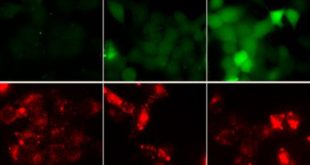
A team of researchers at the University of Warwick, UK, has identified Connexin26 (Cx26) as a key molecule that reacts to carbon dioxide (CO2) in our bodies and activates breathing. The study is published in the journal Proceedings of the Royal Society B. CO2-dependent dye loading of HeLa cells expressing …
Read More »New Study Highlights How Antibiotics Can Stimulate Bacterial Reproduction
The growth of bacteria can be stimulated by antibiotics, according to a study published in the journal Nature Ecology Evolution. A DNA coverage plot for Escherichia coli following 60 generations (96?h) of growth in the presence and absence of doxycycline: data in the presence (three inner annuli, ‘Dox’) and absence …
Read More »Sleep Deprivation Suppresses Your Immune System, Study of Twins Shows
A University of Washington-led team of researchers studying monozygotic (identical) twins has found that chronic sleep deprivation suppresses immune system. The research is published in the journal Sleep. The study by N.F. Watson et al shows the transcriptomic effects of habitual short sleep on dysregulated immune response and provides a …
Read More »
#Bizwhiznetwork.com Innovation ΛI |Technology News