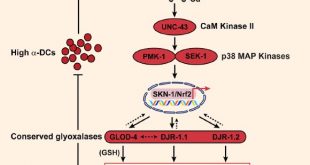
An international team of scientists from the United States and China has found a sensor for the reactive molecules linked to diabetic complications. The study, done in the nematode worm Caenorhabditis elegans, provides particular promise for those suffering from painful diabetes-related nerve damage. TRPA-1/TRPA1 activation via a-dicarbonyls (a-DCs) is relayed …
Read More »Active Marijuana Use May Double Risk of Stress Cardiomyopathy, Study Says
According to a new study by researchers at St. Luke’s University Health Network, active cannabis use may double the risk of stress cardiomyopathy, a sudden, usually temporary, weakening of the heart muscle that reduces the heart’s ability to pump, leading to chest pain, shortness of breath, dizziness and sometimes fainting. …
Read More »Newly Discovered Antibody ‘Neutralizes’ Zika Virus, Shows Mouse Study
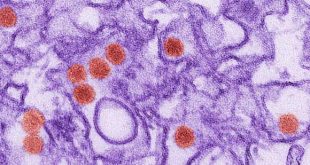
A research team led by Vanderbilt University Medical Center scientist Prof. James Crowe, Jr., has isolated a human monoclonal antibody that in a mouse model ‘markedly reduced’ infection by the Zika virus. Transmission electron micrograph of Zika virus. Virus particles are 40 nm in diameter, with an outer envelope, and …
Read More »Study: High Blood Pressure Affects Over a Billion People Worldwide
As many as 1.13 billion people in the world have high blood pressure, says a new study published in the journal The Lancet. The study reveals the number of people with high blood pressure has nearly doubled in four decades. Image credit: Gerald Oswald. Researchers from an international consortium called …
Read More »Newly Identified Antibody Neutralizes 98% of HIV Strains
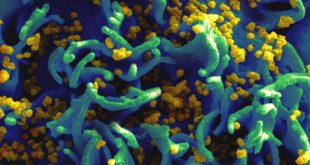
A team of researchers led by Dr. Mark Connors of NIH’s National Institute of Allergy and Infectious Diseases has identified an antibody from an HIV-infected person that neutralized 98% of HIV strains tested, including 16 of 20 strains resistant to other members of its class. Scanning electron micrograph of HIV …
Read More »Humimycins: Scientists Discover Two New MRSA-Active Antibiotics
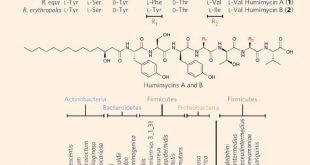
Using a novel approach called syn-BNP (synthetic-bioinformatic natural product) approach, scientists from the Rockefeller and Rutgers Universities have discovered two promising new antibiotics active against methicillin-resistant Staphylococcus aureus (MRSA), a bacterium that causes infections in different parts of the body and poses a serious threat to millions of people throughout …
Read More »Symptom-Free Ebola Discovered in Sierra Leone
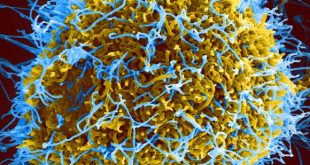
A research team headed by Stanford University scientist Eugene Richardson has identified twelve individuals with previously undetected Ebola virus infection in a ‘hotspot’ village in Sierra Leone, approximately one year after the village outbreak. Colorized scanning electron micrograph of filamentous Ebola virus particles (blue) budding from a chronically infected cell …
Read More »Study Says Avoiding the Sun is an Emerging Health Problem
Americans are increasingly at risk of insufficient sun exposure, according to a landmark study published this week in the Journal of Dermato-Endocrinology. According to Hoel et al, the message of sun avoidance must be changed to acceptance of non-burning sun exposure sufficient to achieve serum 25(OH)D concentration of 30 ng/mL …
Read More »Yoga is Relatively Safe, Researchers Say
Participating in yoga is relatively safe, but know your limits, say researchers at the University of Alabama at Birmingham (UAB) who conducted the first large-scale examination of yoga-related injuries. According to the study, participants aged 65 years and older have a greater rate of injury from practicing yoga when compared …
Read More »Long-Term Marijuana Use Blunts Brain’s Reward System, Say Researchers
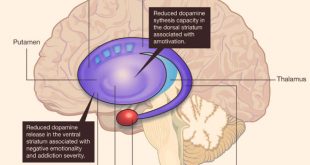
Regular use of cannabis over many years lowers levels of dopamine, a key chemical in the brain’s reward center, says an international team of researchers led by Imperial College London’s Professor Oliver Howes. Cannabis use in humans is associated with reduced dopamine in the striatum. PET studies have shown lower …
Read More »
#Bizwhiznetwork.com Innovation ΛI |Technology News