Science

Mars Odyssey Captures Phobos in Infrared Light
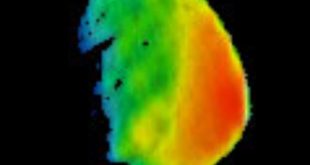
The Thermal Emission Imaging System (THEMIS) camera on NASA’s Mars Odyssey spacecraft observed Phobos — the larger and inner of the two natural satellites of the Red Planet — on September 29, 2017. This image combines two products from the first pointing at Phobos by Mars Odyssey’s THEMIS camera. Surface-temperature …

Read More »

Human Brain Has Lymphatic System, Scientists Discover

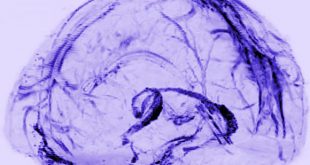
A team of researchers from the National Institutes of Health has discovered lymphatic vessels in the dura, the leathery outer coating of the brain. Described in the journal eLife, the discovery holds promise for better understanding the normal physiology of lymphatic drainage from the central nervous system and potential aberrations …

Read More »

Newborn Ichthyosaur Reveals Its Last Meal

A team of paleontologists in the UK has identified the smallest and youngest specimen of the ichthyosaur Ichthyosaurus communis on record, and found the remains of a prehistoric squid within its stomach. Reconstruction of a newborn Ichthyosaurus communis. Image credit: Julian Kiely. The ichthyosaur fossil has a total length of …

Read More »

Study: Zinc Inhibits Growth of Esophageal Cancer Cells

An international research team led by University of Texas at Arlington scientist Zui Pan has discovered that zinc selectively halts the growth of cancer cells but not normal esophageal epithelial cells. Zinc selectively inhibits cancer cell growth. Image credit: Office of Dietary Supplements, National Institutes of Health. According to the …

Read More »

Discovery of Gravitational Waves Wins 3 US Scientists Nobel Prize

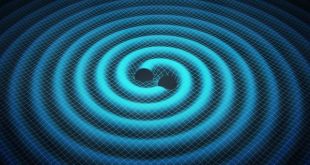
In 1916, the famed theoretical physicist Albert Einstein postulated certain events in the universe would produce gravitational waves. The detection of such waves would be even more confirmation of general relativity, but Einstein suspected the waves would be too faint to be detected on Earth. Now, 100 years later, three …

Read More »

‘Nutcracker Man’ Gave Us Genital Herpes, Study Says

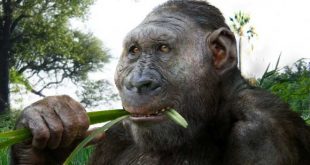
New research from the University of Cambridge and Oxford Brookes University predicts which species acted as an intermediary between the ancestors of Homo sapiens and those of chimpanzees to carry the herpes simplex virus 2 (HSV2) — a human herpesvirus found worldwide that causes genital lesions and more rarely causes …

Read More »
Bizwhiznetwork Consultation