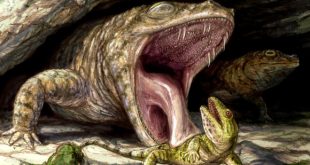
Exceptionally large individuals of Beelzebufo ampinga, an extinct species of frog that lived in Madagascar during the Late Cretaceous epoch, about 68 million years ago, were capable of eating small dinosaurs, according to an international research team led by California State Polytechnic University scientists. South American horned frog showing round …
Read More »New Study Reveals Remarkable Genetic Diversity among Papuan New Guinean Peoples
An international team of researchers led by the Wellcome Trust Sanger Institute has analyzed genome-wide data of 381 individuals from 85 language groups in Papua New Guinea and found that different groups within the country are genetically highly different from each other. The research is published in the journal Science. …
Read More »Researchers Identify New Type of Lung Cell
A research team led by Boston University scientists has identified a new type of lung cell that is implicated in the body’s immune defense against pneumonia-causing bacteria. Immunohistochemical analysis of a human lung section stained with anti-PIWIL4 antibody. Scale bars – 10 ?m. Image credit: Wasserman et al, doi: 10.1172/JCI94639. …
Read More »Planetary Researchers Find More Evidence of Water on Early Mars
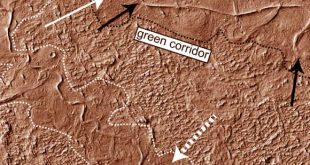
River deposits exist across the Martian surface. A large sedimentary basin named Aeolis Dorsa contains some of the planet’s most spectacular and densely packed river deposits. In a new paper published in the Geological Society of America Bulletin, planetary researchers provide evidence that these deposits represent incised valleys carved and …
Read More »Snow Leopards Not Considered ‘Endangered’.
Stalking the mountains at the roofing system of the world, the enigmatic snow leopard has just had a stay of execution. The International Union for the Preservation of Nature, which examines wildlife as to how great or bad they are faring, has actually simply revealed that the huge cats are …
Read More »Ancient Indian Manuscript Contains Oldest Example of Mathematical Symbol ‘Zero’
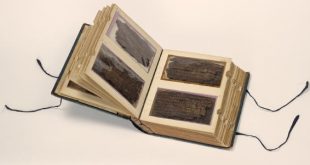
The Bakhshali manuscript, an ancient Indian mathematical manuscript written on more than 70 leaves of birch bark, is notable for having a dot representing ‘zero’ in it. The date of the manuscript has intrigued scientists for years, with many believing it dated from the 9th century CE. Now researchers from …
Read More »Ancient Primitive Amphibians Had Mouthful of Teeth, New Research Finds
Temnospondyls — a diverse group of extinct small-to-giant amphibians that flourished worldwide during the Carboniferous, Permian, and Triassic periods — had a full array of teeth, large fangs and thousands of tiny hook-like structures called denticles on the roofs of their mouths, according to new research published in the journal …
Read More »Song Playback Experiments Reveal 21 Possible New Species of Birds
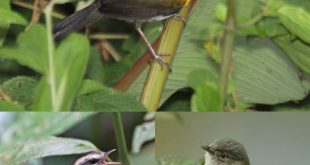
Two bird species that look the same, but have songs so different they can’t recognize each other, should be considered distinct species, according to a study by University of British Columbia postdoctoral researcher Benjamin Freeman and Cornell University researcher Graham Montgomery. Among the 72 related populations of Neotropical passerine birds …
Read More »How Cassini Changed Our Understanding of Saturn and the Solar System
While many of us were stuck sitting behind a school bus in rush-hour traffic this morning, far away from us a much higher-speed spectacle took place. After thirteen years of sometimes bootstrapped and often surprising science, Cassini has reached the end of its mission, and NASA deorbited it into Saturn …
Read More »NASA’s New Horizons Probe Wakes Up to Study Kuiper Belt
More than three and a half billion miles away, NASA’s New Horizons probe has woken up from its long slumber, ready to take on a new mission in the outer reaches of the solar system. New Horizons was launched with the intention of studying Pluto up close for the first …
Read More »
#Bizwhiznetwork.com Innovation ΛI |Technology News