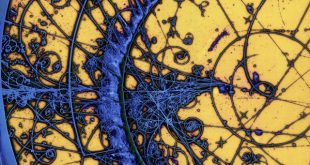
One of the big questions in science is not just “why are we here?’ It’s, “why is anything here?” Scientists at CERN have been looking into this one over the last several years, and there’s still no good answer. In fact, the latest experiment from physicists working at the Swiss …
Read More »Eurasian Shrews’ Skulls Shrink with Season, Study Shows
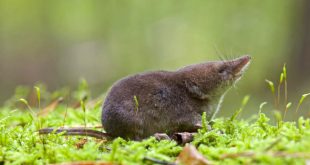
According to a study led by Dr. Javier Lazaro of the Max Planck Institute for Ornithology, the skulls of Eurasian shrews (Sorex araneus) shrink in anticipation of winter, by an average of 15.3%; as spring approaches, their skulls grow again to approach their previous size. The study appears in the …
Read More »Saturn Moons Stained by Enceladus’ ‘Ingredients for Life’
Weathered organic material once dissolved in Enceladus’ subsurface ocean is coating Saturn’s inner moons, explaining surprising variations in their surface colour and UV absorption. This is according to a new analysis that could provide a way to investigate the makeup of our solar system’s most likely watery home to alien …
Read More »Study Challenges Long-Held Evolutionary Theory
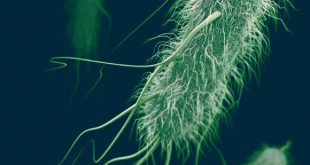
Researchers involved in the E. coli long-term evolution experiment (LTEE) have debunked an established evolutionary theory with a study that provides a ‘high-resolution’ view of the molecular details of adaptation. This illustration depicts a 3D computer-generated image of a group of Escherichia coli. Image credit: James Archer, CDC. “Evolutionary adaptation …
Read More »New Bird Species Discovered in Peru: Machaeropterus eckelberryi
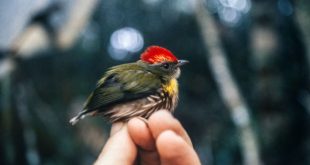
A new species of manakin, called Machaeropterus eckelberryi, has been discovered in the foothills of southwestern Loreto and northern San Martín departments, Peru. Machaeropterus eckelberryi. Image credit: Andy Kratter, Florida Museum of Natural History. Machaeropterus eckelberryi was first sighted in the Cordillera Azul, an isolated mountain ridge in Peru, in …
Read More »Cereal Domestication May Have Started 10,000 Years Earlier than Scientists Thought
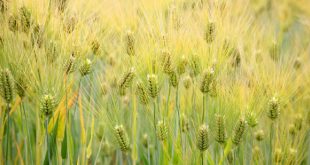
According to a new study published in the Philosophical Transactions of the Royal Society B, ancient peoples began to systemically affect the evolution of crops up to 30,000 years ago — around 10,000 years before researchers previously thought. Barley (Hordeum vulgare). Image credit: Cliff. Wild plants contain a gene which …
Read More »Amalthea Casts Shadow on Jupiter
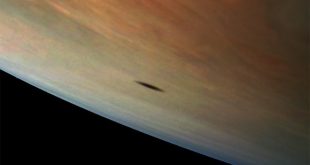
On September 1, 2017, NASA’s Juno spacecraft witnessed a remarkable cosmic event — a small Jovian moon called Amalthea blocked the sunlight and cast a shadow on the face of the gas giant. Amalthea casts a shadow on Jupiter in this image captured by NASA’s Juno spacecraft; the elongated shape …
Read More »Archaeologists Find Cache of Assyrian Cuneiform Tablets in Iraq
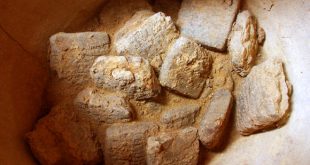
Excavations led by a University of Tübingen archaeologist at the site of a recently-discovered Bronze Age settlement in the Kurdistan region of Iraq have uncovered almost 100 clay tablets dating back to the period of the Middle Assyrian Empire (1250 BC). 3,250-year-old cuneiform tablets were found inside a clay vessel …
Read More »New Research Reveals Origin of Ceres’ Organic Matter
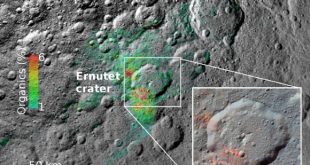
Organic-rich materials found on Ceres by NASA’s Dawn orbiter are native to the dwarf planet, according to new research led by Southwest Research Institute planetary researcher Simone Marchi. Dawn data show a region around Ceres’ Ernutet crater where organic concentrations have been discovered; the color coding shows the surface concentration …
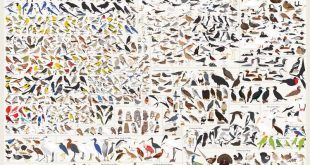
Read More »This Stunning Poster Consists Of Every Single Bird You’ll See in North America
Whether you’re a bird enthusiast or an information fiend, this poster will please you exceptionally.(See a zoomable version here.) The newest production from the information maniacs at Pop Chart Laboratory, “Birds of The United States and Canada” includes every types of bird you can see in this part of the …
Read More »
#Bizwhiznetwork.com Innovation ΛI |Technology News