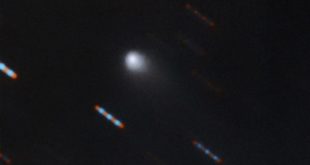
Astronomers around the world were elated in 2017 when ‘Oumuamua appeared in the sky, becoming the very first confirmed alien object to visit our solar system. Sadly, ‘Oumuamua was already on its way out of the solar system before its discovery by the Pan-STARRS observatory, and we couldn’t capture …
Read More »Two New Giant Salamander Species Identified
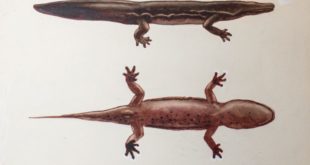
A team of researchers from the United Kingdom, Canada and China has discovered there are not just one but three distinct species of Chinese giant salamanders. One of these species, Andrias sligoi, is possibly the world’s biggest amphibian. Wild Chinese giant salamander. Image credit: Ben Tapley, Zoological Society of London. …
Read More »Bony Vertebrates Release Bone-Derived Hormone Osteocalcin in Response to Stress, Study Finds
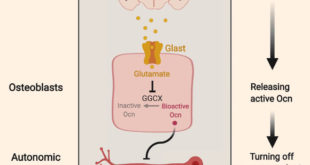
A new study, published in the journal Cell Metabolism, shows that humans and other bony vertebrates need a hormone called osteocalcin to develop an acute stress response, a function critical to survival in the wild; when they encounter an immediate danger, a brain-derived signal stimulates the release of osteocalcin from …
Read More »Drinking Tea Improves Brain Efficiency, New Study Shows
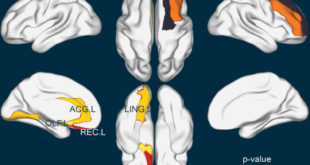
Habitual tea drinking has positive effects on brain organization and gives rise to greater efficiency in functional and structural connectivity, according to a new study led by the National University of Singapore (NSU). Li et al provide the first evidence of the positive contribution of tea drinking to brain structure. …
Read More »Bacterial Communities Produce Compounds for Scent Marking in Cats: Study
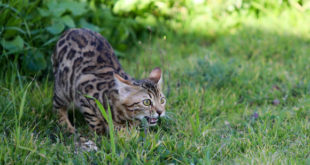
Smelly organic compounds from male cats are actually made not by the animals, but by bacteria living in their anal sacs, according to new research reported in the journal PLoS ONE. Yamaguchi et al examined the fermentation hypothesis by characterizing volatile organic compounds and bacteria isolated from anal sac secretions …
Read More »Water Detected on Planet Inside the Habitable Zone for the First Time
The astronomers who comb through data on planetary surveys looking for potentially habitable planets are searching for worlds with certain specific characteristics. We assume that any planet capable of supporting life has to exist within the habitable zone (also sometimes called the “Goldilocks zone”) of its host star. Too …
Read More »Two New Species of Electric Eels Discovered
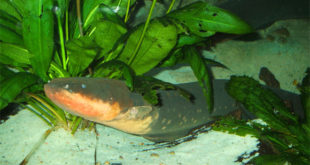
The electric eel (Electrophorus electricus) has long been assumed to be one species, but an international team of scientists has now discovered there are actually three separate ones. Electric eel (Electrophorus electricus) at the New England Aquarium, Boston. Image credit: Steven G. Johnson / CC BY-SA 3.0. The electric eel …
Read More »Meet Mystriosaurus laurillardi, Marine Crocodile from Jurassic Period
An incomplete crocodile skull found near the city of Altdorf in Bavaria, southern Germany, in the 1770s has been recognized as Mystriosaurus laurillardi, which lived in tropical waters during the Jurassic period. Life reconstruction of Mystriosaurus laurillardi. Image credit: Julia Beier. “Mystriosaurus laurillardi is one of the first marine crocodile …
Read More »A Second Interstellar Visitor Is Approaching Our Solar System
In 2017, an interstellar object named ‘Oumuamua shot through our own solar system. It was the first time we’d ever detected an interstellar object passing through the solar system, and its unusual shape recalled the artificial vessel in Arthur C. Clarke’s Rendezvous with Rama science fiction novel. Now, an …
Read More »Extinct Kangaroo Had Feeding Habits Similar to Giant Panda
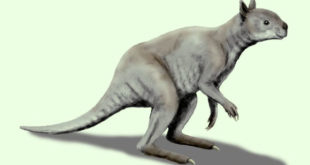
An analysis of the skull biomechanics of Simosthenurus occidentalis, a species of giant short-faced kangaroo that persisted until about 42,000 years ago, indicates that the extinct animal had a capacity for high-performance crushing of foods, suggesting feeding behaviors more similar to the modern-day giant panda (Ailuropoda melanoleuca) than modern-day kangaroos. …
Read More »
#Bizwhiznetwork.com Innovation ΛI |Technology News