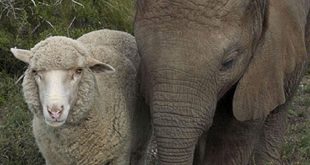
According to new research, Asian elephants (Elephas maximus) are able to recognize their own bodies as obstacles to success in problem-solving, further strengthening evidence of their intelligence. Once standing on the mat, elephants were instructed to pick up the stick and give it to the experimenter. Image credit: E. Gilchrist. …
Read More »Kuphus polythalamia: Marine Biologists Study Giant Mud-Dwelling Shipworm for First Time
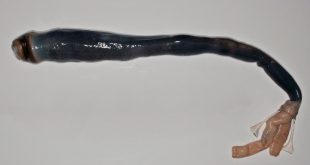
An international team of marine biologists, led by researchers at Northeastern University and the University of Utah, is the first to investigate a never before studied species — the giant mud-dwelling shipworm Kuphus polythalamia. According to the researchers, this marine animal doesn’t seem to eat much; instead it gets its …
Read More »Ancient DNA showcases a war between our hominid ancestors and viruses
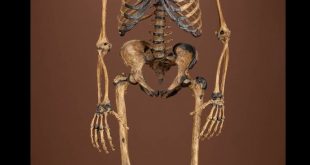
Viruses reproduce by infiltrating living cells and taking over the biological machinery inside. It’s an insidious process that can leave the host with a life-threatening illness, a mild fever, or no ill effects at all. Recent advances in medical science have allowed humans to combat viruses like never before, but …
Read More »Klosneuviruses: New Group of Giant Viruses Discovered
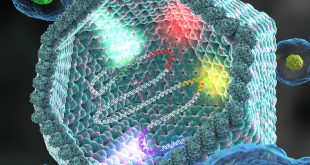
Researchers from Austria and the United States have identified a group of giant viruses — Klosneuviruses — that harbor components of many other viruses and proteins, and their analyses suggest that Klosneuviruses acquired the various components in an evolutionarily recent time frame, likely from, and as an adaptation to, their …
Read More »Galagoides kumbirensis: New Species of Dwarf Galago Discovered in Angola
An international group of primatologists has discovered a new primate, Galagoides kumbirensis (Angolan dwarf galago), with features not been seen by science before. The Angolan dwarf galago (Galagoides kumbirensis) prefers moist, tall forest, primary, and secondary and semiarid baobab savannah-woodland. Image credit: Elena Bersacola. Galagos, also known as bushbabies, are …
Read More »Honey Bees Have Better Vision Than Previously Thought
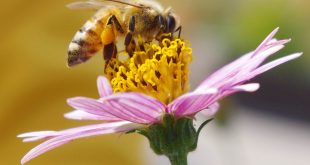
A new study by researchers at the University of Adelaide and Lund University that appears online today in the journal Scientific Reports suggests that honey bees have much better vision than previously thought. A western honey bee (Apis mellifera) in Nagakute, Aichi, Japan. Image credit: Emran Kassim / CC BY …
Read More »Meet Cave Loach, Europe’s First Cave Fish
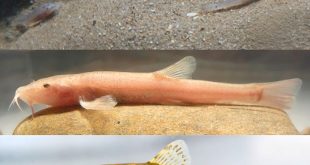
A team of scientists and cave divers has discovered and described the first European cave fish — a loach of the genus Barbatula. Loaches Barbatula sp. Top: two cave loaches in their natural habitat. Center: adult male loach with typical adaptations to living in caves: reduced eyes, enlarged barbels and …
Read More »Social Bees Have Kept Symbiotic Gut Bacteria for 80M Years, New Study Says
About 80 million years ago (Cretaceous period), a group of bees began exhibiting social behavior. Today, their descendants — honey bees, stingless bees, and bumble bees — carry ‘stowaways’ from their ancient ancestors. The stingless bee Trigonisca ameliae in Colombian copal. Image credit: Dr David Penney / University of Manchester. …
Read More »World’s First Glow-In-The-Dark Frog Found in Argentina
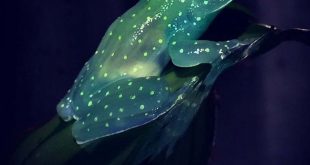
Scientists in Argentina have discovered a frog that glows in moonlight and at twilight. Fluorescence in terrestrial environments had previously only been traced to a few species of insects and birds and had never been scientifically reported in any of the world’s 7,000-plus amphibian species. Fluorescence in the polka-dot tree …
Read More »New Frog Species Discovered: Ecuadorian Rainfrog
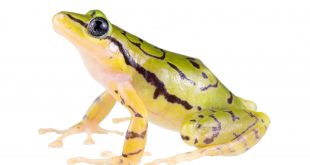
A species of frog that is completely new to science has been discovered in the cloud forests of Ecuador. The Ecuadorian rainfrog (Pristimantis ecuadorensis), adult female. Image credit: J.M. Guayasamin et al, doi: 10.1371/journal.pone.0172615. Writing in the journal PLoS ONE, Professor Juan Guayasamin of the Universidad San Francisco de Quito …
Read More »
#Bizwhiznetwork.com Innovation ΛI |Technology News