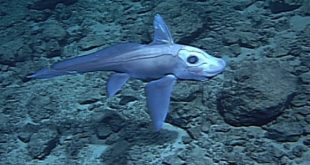
A large deep-water fish that was previously identified in the Southeastern Pacific has recently been found around the Hawaiian Islands and off the coast of Central California, according to a team of marine biologists from the Monterey Bay Aquarium Research Institute (MBARI), the Pacific Shark Research Center and the California …
Read More »Study: Drop in nSR100 Protein Levels Causes Autistic-Like Behavior in Mice
As many as 33% of autism cases could be explained by a scarcity of a protein called nSR100 in the brain, a new study in the journal Molecular Cell has revealed. Mathieu Quesnel-Vallières et al induced autistic-like behavior in mice by lowering the levels of nSR100 protein, which is important …
Read More »Researchers create a tiny tractor beam that totes bacteria around
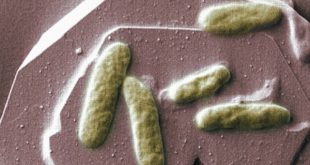
One of the problems with imaging living biological cells is that they don’t want to be held still. Or, more accurately, they don’t want to be held to a surface like a microscope slide. Prepping and fixing the cells changes them irrevocably, altering whatever a scientist was trying to observe. …
Read More »Mysterious Sound Recorded in Mariana Trench Believed to be from Minke Whales
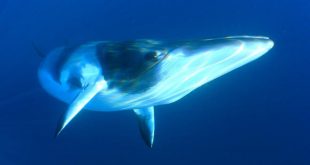
A strange sound in the Mariana Trench notable for its complexity likely represents the discovery of a new minke whale call, says a team of marine researchers from Cornell University and Oregon State University. Minke whale. Image credit: Len Joh / CC BY-ND 2.0. Dubbed the ‘Western Pacific Biotwang,’ this …
Read More »Brazilian Capuchin Monkeys Unintentionally Make Sharp-Edged Stone Flakes
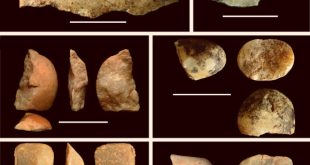
A University of Oxford-led team of scientists has observed bearded capuchins (Sapajus libidinosus) in Brazil deliberately break stones, unintentionally producing sharp-edged flakes that have the characteristics and morphology of intentionally produced hominin tools. Examples of flaked stones produced by bearded capuchins (Sapajus libidinosus). Scale bars – 5?cm. Image credit: Tomos …
Read More »Researchers Discover New Species of Leggy Millipede in California
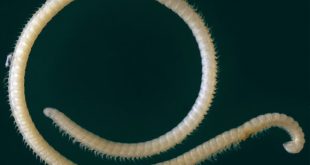
A new species of millipede, called Illacme tobini, has been discovered in a cave in Sequoia National Park, California. Illacme tobini. Scale bar – 1 mm. Image credit: P.E. Marek et al. The new species was identified and named by millipede taxonomist Dr. Paul Marek of Virginia Tech and his …
Read More »New Species of Drywood Termite Discovered in Colombia
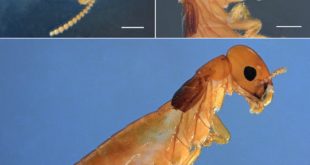
A new species of drywood termite has been described from tropical dry forests of Colombia’s Caribbean coast. Proneotermes macondianus. Scale bars – 0.5 mm. Image credit: Casalla R. et al. Discovered by termitologists from Germany, the United States and Colombia, the new termite has been officially named Proneotermes macondianus. “The …
Read More »Common Swifts Can Stay Ten Months in Air without Landing, Claim Ornithologists
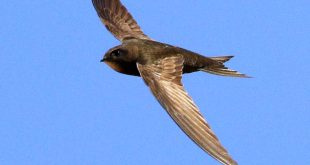
Common swifts (Apus apus) remain airborne for 10 months of their non-breeding period, according to a new study by Lund University ornithologists. A common swift (Apus apus). Image credit: N. Camilleri. While there had been examples of birds remaining in flight for periods of months, including frigate birds and alpine …
Read More »Vitamin D Enhances Lifespan and Protein Homeostasis, New Study Shows
A new animal study published in the journal Cell Reports shows vitamin D engages longevity genes to increase lifespan and prevent the accumulation of toxic proteins linked to age-related chronic diseases. Mark et al demonstrate that vitamin D promotes protein homeostasis and slows aging in the nematode C. elegans. Image …
Read More »Three New Species of Forest Robin Discovered in Africa
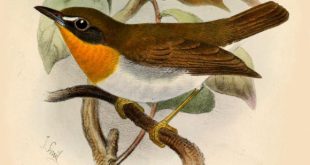
Researchers have described three new species in the previously monotypic bird genus Stiphrornis: two from West Africa and one from the Congo. Stiphrornis erythothorax, until now the only species in the genus Stiphrornis, by Joseph Smit, 1883, in the Catalogue of the birds in the British Museum, vol. 7. The …
Read More »
#Bizwhiznetwork.com Innovation ΛI |Technology News