Oxytocin, a powerful hormone produced by all mammals, including canines, is a key factor in the interaction between dogs and humans, according to a new study led by University of Helsinki researchers. Happy faces are attractive to dogs. Image credit: Sanni Somppi. “It seems that oxytocin influences what the dog …
Read More »Scientists Find Evidence of ‘Handedness’ in Blue Whales
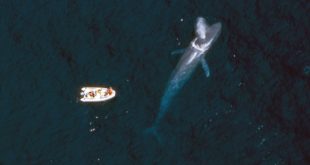
A group of marine biologists that used motion-sensing tags to track the movements of blue whales (Balaenoptera musculus) off the California coast discovered that most have a lateralization bias — in other words, they essentially are right- or left-handed. The study appears in the journal Current Biology. A blue whale …
Read More »Marine Biologists Discover Three New Species of Sea Slugs
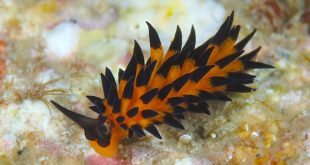
A team of researchers led by California State University’s Professor Patrick Krug has discovered three cryptic new species of sea slugs, and named one of them after former U.S. President Barack Obama. Placida cremoniana. Image credit: Izuzuki Diver / CC BY-SA 2.5. The three new species belong to an enigmatic …
Read More »Scientists Find Ancient Life Form Thriving in Tasmania
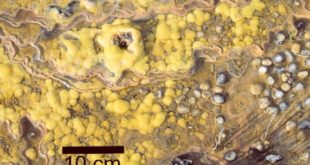
Tasmanian scientists have found living stromatolites (oldest known life form) in the Giblin River catchment of the UNESCO-listed Tasmanian Wilderness World Heritage Area, Australia. Giblin River stromatolites. Image credit: Proemse et al, doi: 10.1038/s41598-017-15507-1. The team made the discovery during a survey of peat-bound karstic wetlands, an unusual type of …
Read More »New Species of Leaf-Mimicking Insect Discovered in South America
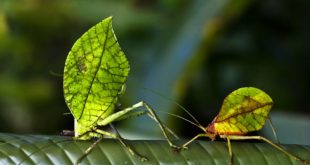
A team of entomologists from the University of Toronto Mississauga, Canada, and the University of Lincoln’s Joseph Banks Laboratories, UK, has discovered a new species of leaf-mimic bushcricket living in the Andes, from Western Ecuador to the middle Central Cordillera in Colombia. The team has also studied the wing mechanics …
Read More »Marine Biologists Find New Type of Eye Cell in Deep-Sea Fish
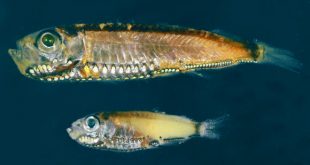
An international team of researchers has found a new photoreceptor type in the eyes of deep-sea pearlsides, which have an unusual visual system adapted for twilight conditions. The research appears in the journal Science Advances. Maurolicus muelleri (top) and Maurolicus mucronatus (bottom). Image credit: Fanny de Busserolles, University of Queensland. …
Read More »Sheep Have Exceptionally High Face-Recognition Abilities, News Study Reveals
According to a new study published in the journal Royal Society: Open Science, sheep can be trained to recognise familiar and unfamiliar human faces from photographic portraits. Sheep recognize familiar and unfamiliar human faces from 2D images. Image credit: Magnus114. Human face recognition is a critical social skill. Humans recognize …
Read More »Scientists Rejuvenate Aged Human Cells
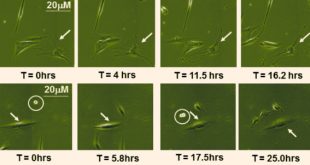
A team of researchers from the Universities of Exeter, Brighton and Oxford has rejuvenated senescent cells to be functionally younger. This discovery builds on earlier findings from the team that showed that genes called splicing factors are progressively switched off as we age, and has the potential to lead to …
Read More »Scientists Identify ‘Missing Link’ in Life’s Chemical Origins
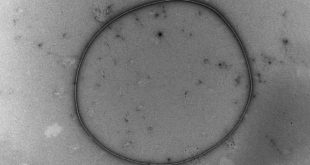
Before biological evolution could take off and produce the incredible variety of plants and animals we have today, there was some chemical process that gave rise to life. Scientists around the world are probing the secrets of chemical evolution, hoping to discover the reactions that produced the first self-replicating molecules. …
Read More »Nocturnal Mammal Ancestors Switched to Daytime Activity after Extinction of Non-Avian Dinosaurs
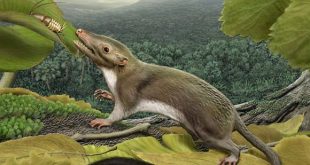
A long-standing theory holds that the common ancestor to all mammals was nocturnal, but new research from Tel Aviv University (TAU) and University College London (UCL) reveals when mammals started living in the daytime for the first time and provides insight into which species changed behavior first. Early mammal. Image …
Read More »
#Bizwhiznetwork.com Innovation ΛI |Technology News