Paleontogly

Fossil Study Rewrites Dinomyidae Family Tree

Adult and juvenile fossil specimens of Isostylomys laurdillardi, a giant rodent that lived in South America between 9 and 6.8 million years ago (Miocene epoch), have been found by paleontologists, raising questions about classification within the rodent family Dinomyidae. Isostylomys laurdillardi. Image credit: Andres Rinderknecht et al. Dr. Andres Rinderknecht …

Read More »

Ancient Giant Penguin Unearthed in New Zealand

The fossilized leg bones of a giant penguin that lived 61 million years ago have been discovered in New Zealand. Artist’s impression of a group of Waimanu penguins on a beach in Paleocene Canterbury. Image credit: Chris Gaskin, Geology Museum, University of Otago. The fossil was found by amateur fossil …

Read More »

105-Million-Year-Old Amber Preserves Pollinating Beetle, Pollen

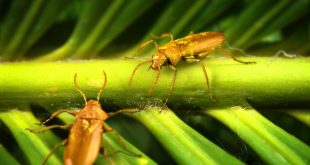
An international team of paleobiologists has uncovered the fossil of a 105-million-year-old gymnosperm pollinating beetle, named Darwinylus marcosi. The fossil, encased in a piece of amber from Spain, is shedding new light on the various ways insects pollinated plants during the mid-Mesozoic era. Reconstruction of Darwinylus marcosi on a gymnosperm …

Read More »

Meet Saccorhytus coronarius, Humans’ Earliest-Known Ancestor

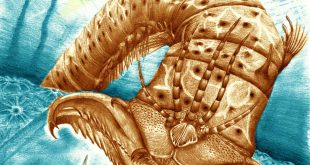
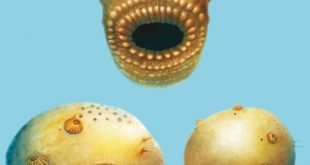
A microscopic, bag-like marine creature that lived approximately 540 million years ago (Fortunian stage of the Cambrian period) has been identified from microfossils found in Shaanxi Province, China. Reconstruction of Saccorhytus coronaries: lateral, hind and ventral views. Image credit: Jian Han et al, doi: 10.1038/nature21072. The ancient animal, named Saccorhytus …

Read More »

Paleontologists Find 450-Million-Year-Old Fossilized Trilobite Eggs

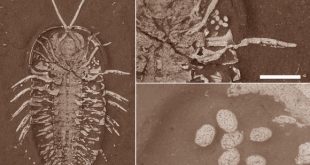
A research team led by Western Illinois University scientist Thomas Hegna has announced the discovery of two pyritized, egg-bearing specimens of the Ordovician trilobite Triarthrus eatoni. Left: ventrally preserved specimen of the Ordovician trilobite Triarthrus eatoni showing nine eggs in the specimen’s left genal angle; scale bar – 5 mm. …

Read More »
Bizwhiznetwork Consultation