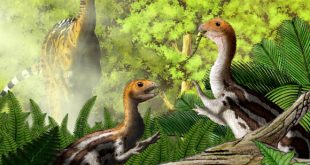
An international team of paleontologists has discovered that Limusaurus inextricabilis, a species of Jurassic dinosaur, lost its teeth in adolescence and did not grow another set as adults. Limusaurus inextricabilis is the only known reptile to lose its teeth and form a beak after birth. Image credit: Yu Chen. Limusaurus …
Read More »2016 Gets Longer with Extra Second Added to New Year Countdown
This New Year’s countdown will be one second longer as the National Physical Laboratory — the UK’s national measurement institute and the birthplace of atomic time — introduces the 27th leap second into UTC. The additional second will keep the timescale based on atomic clocks in sync with time based …
Read More »Mesentery: Researchers Reclassify Part of Digestive System as Organ
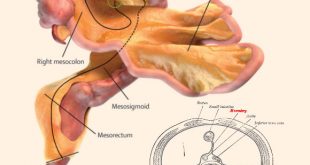
The mesentery, which connects the intestine to the abdomen, had for hundreds of years been considered a fragmented structure made up of multiple separate parts. However, new research by University Hospital Limerick scientists found the mesentery is one, continuous structure. Digital representation of the small and large intestines and associated …
Read More »Researchers Sequence Genome of Dry Jujube
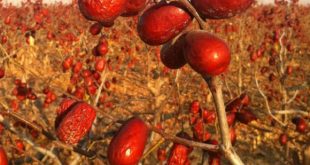
The high quality genome sequence of the dry jujube cultivar ‘Junzao,’ along with sequences from trees throughout its range, have illuminated the domestication history of this popular Asian fruit tree. ‘Junzao’ jujube in Xinjiang, China. Image credit: Xingang Li. The Chinese jujube (Ziziphus jujuba) is one of the oldest cultivated …
Read More »Archaeologists Find Compelling Evidence for New Pharaonic Tombs in Egypt
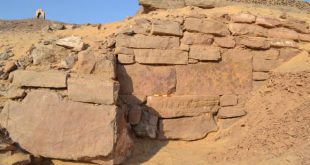
Archaeologists from the University of Birmingham and the Egypt Exploration Society (EES) Qubbet el-Hawa Research Project (QHRP) yesterday announced the discovery of a 6.5-foot (2 m) high ancient encroachment wall in the northern part of the West Aswan cemetery at Qubbet el-Hawa, Aswan. The newly-discovered ancient wall at Qubbet el-Hawa, …
Read More »Hot Pepper Compound Inhibits Growth of Breast Cancer Cells
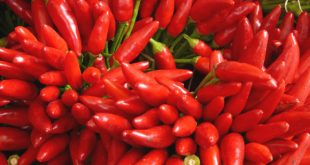
Capsaicin, a compound found in peppers of the genus Capsicum, inhibits the growth of breast cancer cells, according to a team of researchers in Germany. Capsaicin is found in Capsicum peppers. Image credit: Hans Braxmeier. The team’s experiments were carried out with the SUM149PT cell culture, a model system for …
Read More »Vitamin D Improves Gut Microbiota, Study Finds
According to a study published in the journal Frontiers in Physiology, extra vitamin D can restore good bacteria in the gut, giving hope in the fight against risk factors for diabetes and heart disease. According to Danmei Su et al., vitamin D improves gut flora. Image credit: Richard Stockton College …
Read More »Inuits Inherited Cold Adaptation Genes from Denisovan-Related Species
In the Arctic, the Inuits have adapted to cold and a seafood diet. After the first genomic analysis of Greenlandic Inuits, a region in the genome containing two genes (TBX15 and WARS2) has now been scrutinized by researchers. Denisovans were probably dark-skinned, unlike the pale Neandertals. Image credit: Mauro Cutrona. …
Read More »NASA says dwarf planet Ceres has plenty of water ice
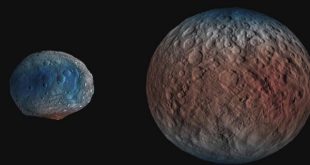
Ceres presented mysteries before the NASA Dawn spacecraft even reached it. Long range images of Ceres taken by the probe revealed unexpected points of light on the surface. There was speculation this could be ice, but now the consensus is leaning toward salt. That doesn’t mean Ceres is lacking in …
Read More »Oldest Evidence for Plant Processing in Pottery Found
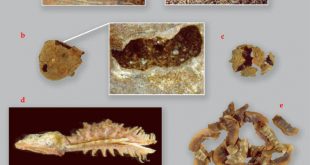
An international team of archaeologists has discovered the earliest evidence of humans processing plants for food found anywhere in the world. The findings are reported in the journal Nature Plants. Exceptionally preserved archaeobotanical remains from the Takarkori rock shelter, Tadrart Acacus, Libya, dating from 7500 to 4200 BC: a – …
Read More »
#Bizwhiznetwork.com Innovation ΛI |Technology News