A team of theoretical physicists at the University of Basel, Switzerland, has found that in the very early Universe, so-called oscillons — strong localized fluctuations of the inflaton field — can act as ‘gravitational wave factories.’ According to Antusch et al, oscillons produced a characteristic peak in the otherwise broad …
Read More »Shortest-Sleeping Mammal? African Elephants Sleep Only Two Hours Per Day
A new study published in the journal PLoS ONE has revealed that wild African elephants (Loxodonta africana) sleep an average of two hours a day and regularly go nearly two days without sleep. African elephants. Image credit: Ro Dobby. African elephants are iconic mammals of the continent and the largest …
Read More »Green Tea Compound Could Have Lifesaving Potential for Patients with Amyloidosis, Multiple Myeloma

The green-tea polyphenol Epigallocatechin gallate (EGCG) may be of particular benefit to patients struggling with amyloidosis and multiple myeloma, according to an international team of researchers led by Washington University in St. Louis. The research is published in the Journal of Biological Chemistry. According to Kathrin Andrich et al, the …
Read More »Researchers Find Myopia-Causing Cells in Retina
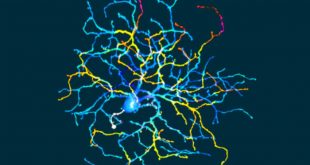
A team of researchers at Northwestern University has discovered a type of retinal ganglion cell that may cause myopia when it dysfunctions. The study is published in the journal Current Biology. This image shows an ON Delayed retinal ganglion cell. Image credit: Adam Mani Gregory W. Schwartz, Northwestern University. This …
Read More »Study: Brain Produces Fructose from Glucose
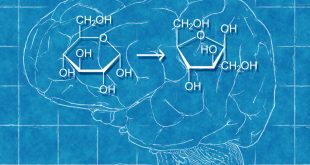
According to a new study by Yale School of Medicine researchers, fructose is converted in the human brain from glucose. The finding, published in the journal JCI Insight, raises questions about fructose’s effects on the brain and eating behavior. Fructose, a simple sugar, is generated in the human brain, according …
Read More »Researchers Find Antimicrobial Substances in Komodo Dragon Blood
A team of researchers at the College of Science at George Mason University has detected 48 antimicrobial peptides in the blood plasma of Komodo dragons (Varanus komodoensis), the largest living lizards. The discovery could lead to the development of new drugs capable of combating antibiotic-resistant bacteria. The Komodo dragon (Varanus …
Read More »Fetal Sex Plays Role in Immunity of Pregnant Women, New Study Finds
Women tend to react with stronger responses to immune challenges while pregnant with girls than with boys, a new study published in the journal Brain, Behavior and Immunity has found. The study by Mitchell et al shows baby’s sex is associated with pregnant women’s immune responses. A team of scientists …
Read More »Vitamin B3 Protects Mice from Glaucoma, Study Finds
Vitamin B3, also known as niacin and nicotinic acid, prevents eye degeneration in glaucoma-prone mice, according to a study published in the Feb. 17 issue of the journal Science. Williams et al show that dietary supplementation with a single molecule (vitamin B3 or NAM) or Nmnat1 gene therapy significantly reduces …
Read More »Vitamin D Protects Against Colds and Flu, New Study Finds
Vitamin D supplementation can help protect against acute respiratory infections including colds and flu, particularly among very deficient individuals, according to a new study published in the journal BMJ. The study by Martineau et al provides the most robust evidence yet that vitamin D has benefits beyond bone and muscle …
Read More »NASA’s Cassini Orbiter Spots Two Small Objects in Saturn’s F Ring
As Cassini continues its ring-grazing orbits, diving just past the outside of Saturn’s F ring, the outermost discrete ring of the planet, it is tracking several small objects there. This image of the object F16QA was obtained using Cassini’s narrow-angle camera on Feb. 5, 2017, at a distance of 610,000 …
Read More »
#Bizwhiznetwork.com Innovation ΛI |Technology News