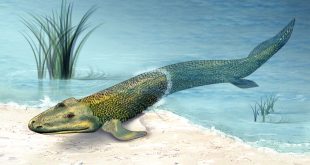
It was the power of the eyes — not the limbs — that first led our ancient aquatic ancestors to make the leap from water to land, according to a team of scientists led by Northwestern University Professor Malcolm MacIver and Lars Schmitz of Claremont McKenna, Scripps and Pitzer Colleges. …
Read More »Researchers Determine Age of Ceres’ Brightest Spot
Cerealia Facula, a dome-like feature located in the center of Ceres’ Occator crater, is only 4 million years old — approximately 30 million years younger than the crater itself, according to research led by Dr. Andreas Nathues of the Max Planck Institute for Solar System Research. Cerealia Facula, a bright …
Read More »Pan: Saturn’s Flying Saucer-Shaped Moon Up Close
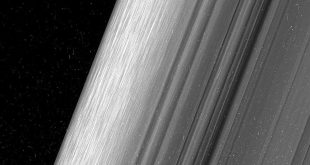
NASA’s Cassini spacecraft captured these stunning images of Pan, the second-innermost moon of Saturn, during a close flyby on March 7, 2017. These images are the closest images ever taken of the flying saucer-shaped moon. This image of Saturn’s small moon Pan was taken during the close flyby of NASA’s …
Read More »Lactobacilli Can Reverse Depression Symptoms, Study Finds
Lactobacilli, a group of probiotic bacteria that ferment milk into yogurt and aid in the digestive process in the body, can reverse depression-like behavior and anxiety in mice, according to a new study published in the journal Scientific Reports on March 7, 2017. Lactobacillus reuteri bacteria (blue). Image credit: Alistair …
Read More »Scientists use lasers to detect enriched uranium from a distance
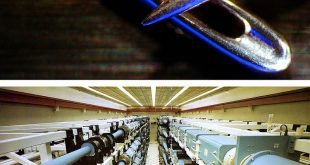
Uranium is actually a rather common element on Earth. You can find it in small quantities within most rocks, but 99.3% of that uranium is the relatively harmless uranium-238. It’s the much more rare uranium-235 that sustains nuclear reactions and is vital in the production of nuclear weapons. Naturally, being …
Read More »Researchers Make Single-Atom Memory from Holmium
According to a research team led by scientists from IBM Almaden Research Center in San Jose, California, and the Institute of Basic Science in Seoul, South Korea, one bit of digital information can now be successfully stored in an individual atom. The research appears today in the journal Nature. The …
Read More »Neanderthals Used Plant-Based Painkillers, Ate Rhinoceros Meat, Mushrooms, Nuts, and Moss
An analysis of ancient DNA entrapped in Neanderthal dental calculus (calcified dental plaque) has revealed the complexity of Neanderthal behavior, including dietary differences between Neanderthal groups and knowledge of medication. El Sidron Neanderthals taste wild mushrooms, pine nuts and forest moss. Image credit: Abel Grau, CSIC Communication. “Dental plaque traps …
Read More »Study: Caffeine, 23 Other Compounds Boost Dementia-Fighting Enzyme
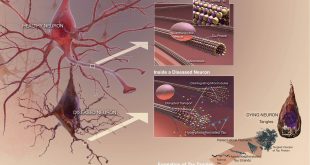
A team of scientists at Indiana University, Bloomington, has identified 24 compounds — including caffeine, retinoic acid, and rolipram — with the potential to boost an enzyme in the brain shown to protect against dementia. Indiana University Professor Hui-Chen Lu and co-authors have identified 24 compounds that increase the brain’s …
Read More »NASA’s Cold Atom Laboratory to Create ‘Coolest Spot in Universe’
This summer, a suite of instruments called the Cold Atom Laboratory (CAL) will fly to the International Space Station (ISS), where it will utilize the microgravity environment of the space station to form, create, and study ultra-cold quantum gases. Artist’s concept of a magneto-optical trap and atom chip to be …
Read More »Two Ichthyosaur Species Found to Be the Same
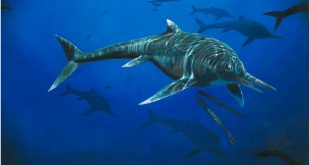
New research by Brockport College Professor Judy Massare and University of Manchester paleontologist Dean Lomax confirms that two species of ichthyosaurs — Ichthyosaurus communis and I. intermedius – are actually one and the same species. Ichthyosaurs. Image credit: Julio Lacerda. Ichthyosaurs — predatory marine reptiles that ranged in size from …
Read More »
#Bizwhiznetwork.com Innovation ΛI |Technology News