Science

Enceladus May Have Tipped Over in Distant Past

While combing through data gathered by NASA’s Cassini spacecraft during flybys of Enceladus, the sixth-largest of Saturn’s moons, researchers have found the first evidence that the frozen moon’s axis has reoriented, possibly due to a collision with a smaller body. This enhanced-color view of Enceladus is largely of the southern …

Read More »

Researchers Sequence Genome of Mojave Desert Tortoise

An Arizona State University-led team of scientists has sequenced the genome of the Mojave desert tortoise (Gopherus agassizii), a long-lived species native to the Mojave Desert. The results could help the animal survive an increasing number of threats. The Mojave desert tortoise (Gopherus agassizii). Image credit: Sandra Leander, Arizona State …

Read More »

Bionic Carbon Fiber Arm From Lamborghini? It Could Happen

Lamborghini’s expertise in carbon fiber may be just what the doctor ordered. The automaker known for go-fast cars will partner with Houston Methodist Research Institute to create live-better humans. They’ll collaborate on the development of carbon fiber composites that could be used for medical purposes. According to Automobili Lamborghini, the …

Read More »

Omentum Performs Unique Immunological Functions

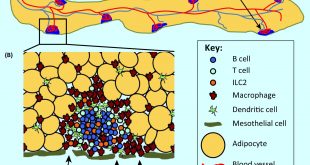
The omentum is an important immune organ that serves as a first line of defense against toxins and infection, according to a review paper published online this week in the journal Trends in Immunology. Structure of milky spots in the omentum. (A) schematic of whole omentum in mice; the omentum …

Read More »

Scientists Detect Gravitational Waves for Third Time

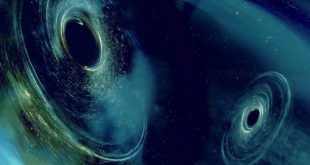
Scientists from the LIGO Scientific Collaboration and the Virgo Collaboration have made a third detection of gravitational waves, ripples in the fabric of space and time, first predicted by Albert Einstein more than a century ago. The research is published in the journal Physical Review Letters. Artist’s conception shows two …

Read More »

Researchers Create Molecular Version of Black Hole

When a team of physicists focused the full intensity of SLAC’s Linac Coherent Light Source (LCLS) Coherent X-ray Imaging instrument — the world’s most powerful X-ray laser with an intensity of 100 quadrillion kilowatts per sq.cm — on a small molecule, they got a surprise: a short laser pulse stripped …

Read More »
Bizwhiznetwork Consultation