Science

Physicists Observe Hyperfine Spectrum of Antihydrogen

In a paper published in the August 3, 2017 issue of the journal Nature, physicists with the ALPHA collaboration, a multinational project based at CERN, report the first detailed observation of spectral lines from an antihydrogen atom, the antimatter counterpart of the simplest atom, hydrogen. Artist’s impression of a cloud …

Read More »

Juno Sees Jupiter’s ‘Little Red Spot’

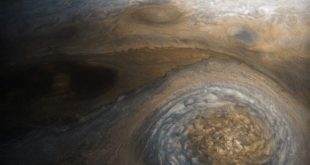
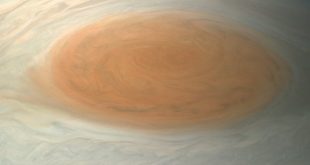
A stunning new image of Jupiter captured by NASA’s Juno robotic orbiter shows a huge storm called the North North Temperate Little Red Spot 1 (NN-LRS-1), the third largest anticyclonic storm on the gas giant. The North North Temperate Little Red Spot 1. Image credit: NASA / JPL-Caltech / SwRI …

Read More »

Diabetes Drug Exenatide Shows Promise against Parkinson’s Disease

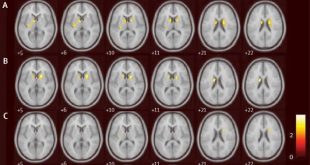
Exenatide, a drug commonly used to treat Type 2 diabetes, may have disease-modifying potential to treat Parkinson’s disease, according to new research from University College London. ANCOVA (analysis of covariance) comparing decline in DaTscan (electrocardiographic and single photon emission CT) binding between the placebo and exenatide groups: (A) placebo group: …

Read More »

Physicists Observe Elusive Neutrino-Nucleus Interactions for First Time

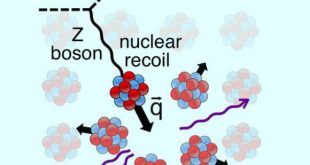
A team of physicists with the COHERENT collaboration is the first to detect and characterize coherent elastic scattering of low-energy neutrinos off atomic nuclei. Coherent elastic neutrino-nucleus scattering. Image credit: COHERENT Collaboration. Neutrinos, miniscule subatomic particles that rarely interact with matter, are often described as ‘ghost-like.’ Chargeless and nearly without …

Read More »

New Study Reveals What Dolphins Eat

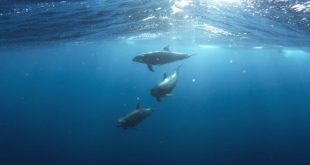
In a new study published in the journal PLoS ONE, a team of U.S. researchers examined the diets of three different dolphin species (the common bottlenose dolphin, the melon-headed whale, and the Gray’s spinner dolphin), and also looked at how they divide ocean resources and space. Dolphins. “We used the …

Read More »

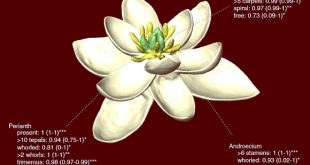
This Is What Earth’s Earliest Flowers Might Have Looked Like

An international team of researchers at the eFLOWER project has reconstructed what the Earth’s ancestral angiosperm flowers might have looked like. 3D model of the ancestral flower reconstructed by the eFLOWER team. Image credit: Sauquet et al, doi: 10.1038/ncomms16047. Flowering plants (angiosperms), with at least 300,000 species, are by far …

Read More »
Bizwhiznetwork Consultation