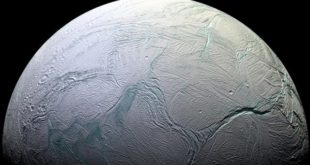
If you wanted to pick an example of how NASA’s deep space missions of exploration have changed our understanding of the solar system over just one lifetime, Enceladus’ would be a great choice. Voyager 2’s observations of the Saturnian moon showed a surface that might have been shaped by …
Read More »Japan’s Hayabusa2 Spacecraft Drops Off Its Last Robot on Asteroid Ryugu
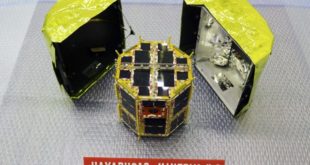
Japan’s Hayabusa2 spacecraft has been hanging around the asteroid Ryugu for more than a year, dropping off robots and blasting the surface with metal slugs. The Japanese Space Agency (JAXA) hopes to bring Hayabusa2 and its precious cargo of asteroid samples home soon, but first, there’s just one more …
Read More »45,000-Year-Old Tiny Stone Tools Found in Sri Lanka
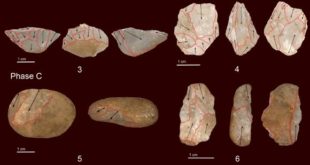
An international team of archaeologists has found a collection of microliths — small, retouched, often-backed stone tools — at the cave site of Fa-Hien Lena in the tropical evergreen rainforests of Sri Lanka. Some of these microliths are 45,000 years old and represent the earliest evidence of such advanced technology …
Read More »Organic Matter Found in 3.5-Billion-Year-Old Stromatolites
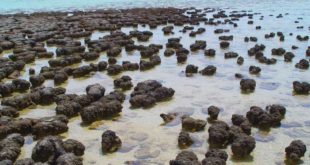
Researchers have found exceptionally preserved organic matter inside samples of rock from the 3.5-billion-year-old Dresser Formation in the Pilbara region of Western Australia. Baumgartner et al provide exceptional evidence for the biogenicity of some of Earth’s oldest stromatolites through preservation of organic matter, including microbial remains, by sulfidization. Image credit: …
Read More »New Cretaceous Pterosaur Discovered in Australia
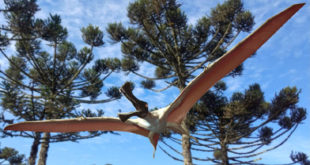
The 96 million-year-old fossilized bones discovered in Queensland, Australia, have been identified as a new genus and species of ornithocheirid pterosaur, Ferrodraco lentoni. Life restoration of Ferrodraco lentoni. Image credit: Travis R. Tischler. Pterosaurs were highly successful reptiles — not dinosaurs, as they’re commonly mislabeled. These creatures thrived from about …
Read More »New Study Reveals Striking Similarities between Tasmanian Tiger and Wolf ‘Non-Coding’ DNA
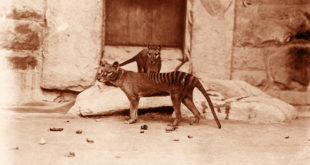
The Tasmanian tiger (Thylacinus cynocephalus), also known as the thylacine, was a carnivorous marsupial found throughout most of Tasmania before European settlement in 1803. The animal had tiger-like stripes running down its lower back and an abdominal pouch, but was perhaps best known for its wolf-like body. Despite sharing a …
Read More »Scientists Find Low-Mass Organic Compounds in Ice Grains from Enceladus’ Plume
Saturn’s moon Enceladus is erupting a plume of gas and ice grains from its south pole. According to new research using data from NASA’s Cassini mission, the Enceladean ice grains contain low-mass nitrogen-, oxygen-bearing, and aromatic compounds. This artist’s painting of the south polar region of Enceladus shows massive jets …
Read More »Study: Tardigrades’ Unique Protein Forms Protective Cloud against Extreme Survival Threats
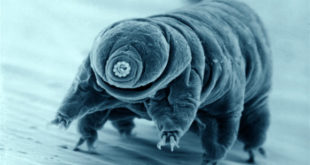
Tardigrades, also known as water bears and moss piglets, are small invertebrate animals that are found in marine, freshwater, and terrestrial habitats throughout the Earth. These tiny creatures have the remarkable ability to survive extremes including very low temperatures, high levels of radiation and exposure to chemicals that are harmful …
Read More »What If Planet 9 Is Actually a Tiny Black Hole?
Scientists have had a hard time agreeing on how many planets there are in the solar system. Most experts will tell you there are eight that we know of, but some people like NASA’s Jim Bridenstine (and Jerry Smith) think Pluto should be among them. There’s increasing evidence of …
Read More »New Freshwater Crocodile Species Found in New Guinea
Scientists had known that New Guinea was home to a unique species of crocodile since the New Guinea crocodile (Crocodylus novaeguineae) was officially described in 1928, but since then, they have wondered if the island was actually home to two separate species, one in the north and one in the …
Read More »
#Bizwhiznetwork.com Innovation ΛI |Technology News