Two new species of shrewlike rats have been discovered living in the montane and mossy forests of Luzon Island, Philippines. The Mingan shrew-rat (Rhynchomys mingan). Image credit: Velizar Simeonovski, Field Museum. The two newfound species belong to Rhynchomys (also known as the tweezer-beaked hopping rats), a genus of unusual Old …
Read More »Biologists Find Salamander-Eating Pitcher Plants in Canada
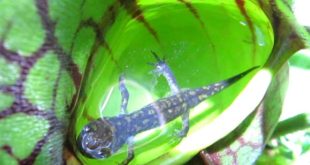
A team of biologists from the Universities of Guelph and Toronto has discovered that a species of carnivorous plant called the northern pitcher plant (Sarracenia purpurea) in Ontario’s Algonquin Park wetlands consume not just bugs but also young spotted salamanders (Ambystoma maculatum). A northern pitcher plant with a trapped salamander. …
Read More »Why Deep-Sea Dragonfish Has Transparent Teeth
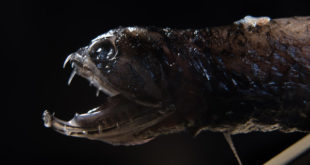
A species of dragonfish called Aristostomias scintillans is a voracious predator of the deep sea with an arsenal of tools to hunt prey. It has proportionately enormous jaws capable of a special mechanism of opening and closure referred to as loosejaw. In contrast to its dark pigmented skin, the species …
Read More »Honeybees May Be Capable of Connecting Symbols to Numbers, Says New Study
A team of scientists from RMIT University, Monash University and the University of Toulouse III has trained honeybees (Apis mellifera) to match a character to a specific quantity, revealing the insects are able to learn that a symbol represents a numerical amount. A honeybee. Image credit: Padmanemi. Studies have shown …
Read More »Feathers Arose 80 Million Years before Birds, Scientists Say
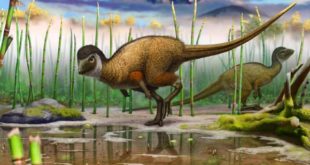
According to a new review paper published in the journal Trends in Ecology Evolution, feathers arose 250-230 million years ago, during the Early Triassic, when life was recovering from the devastating end-Permian mass extinction. Reconstruction of Kulindadromeus zabaikalicus. Image credit: Andrey Atuchin. It is shocking to realize that feathers originated …
Read More »New Species of Rat Snake Discovered
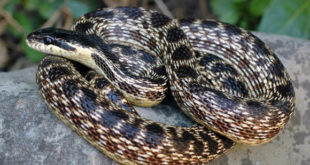
An international team of scientists has described a cryptic new species of rat snake in the genus Elaphe. The Urartian rat snake (Elaphe urartica) in Armenia. Image credit: Boris Tuniyev. Elaphe is a snake genus with distribution in temperate, subtropical, and tropical zones of both eastern and western hemisphere. The …
Read More »Young Women Have Higher Gut Bacterial Diversity than Young Men
In a new study in the journal mSystems, an international team of researchers analyzed the relationship of age and sex to gut bacterial diversity in adult cohorts from four geographic regions. They found that younger age is positively associated with gut bacterial diversity in both men and women, but young …
Read More »Study: Bonobo Mothers Play Strong Role in Helping Adult Sons Find Mate
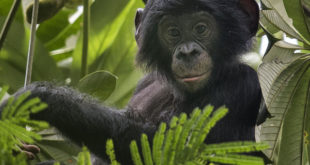
In many group-living mammals, mothers may increase the reproductive success of their adult daughters. However, whether such maternal effects exist for adult sons is largely unknown. A new study, published in the journal Current Biology, shows that adult bonobo males have higher paternity success when their mother is living in …
Read More »Chimps Use Tools to Excavate Underground Food, Study Says
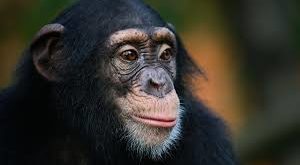
Naïve chimpanzees are able to spontaneously use tools in order to excavate underground food, according to a new study, published in the journal PLoS ONE. The animals prefer longer tools for excavation and exhibit six different tool use behaviors in the context of excavation: digging, probing, perforating, pounding, shoveling and …
Read More »Deep-Sea Fishes Catch Color with Rods
Some deep-sea fishes have developed highly sensitive color vision that could help them determine predator from prey in the dimly-lit depths. The lanternfish has bioluminescent organs and an increased number of rod opsin genes. Image credit: Zuzana Musilová, Charles University. Color vision in vertebrates is usually achieved through the interaction …
Read More »
#Bizwhiznetwork.com Innovation ΛI |Technology News