Historians often trace the dawn of human civilization back 10,000 years, when Neolithic tribes first settled and began farming in the Fertile Crescent, which stretches through much of what we now call the Middle East. Prehistoric peoples domesticated plants to create the cereal crops we still grow today, and in …
Read More »Scientists Find Meteorite-Eating Microorganism
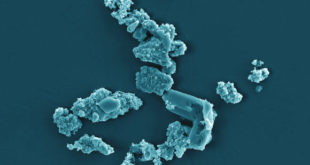
A varieties of archaea called Metallosphaera sedula can development on stony meteorites, using steels entraped within these extraterrestrial items as the single power resource, according to brand-new research study led by University of Vienna astrobiologists. SEM picture revealing Metallosphaera sedula cells conquering the surface area of the NWA 1172 fragments. …
Read More »Puffins Regulate Their Body Temperature Thanks to Their Impressively Large Bills
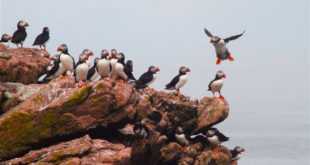
Tufted puffins (Fratercula cirrhata) possess large bills and are members of the bird family with energetically expensive flight. In a new study, a team of researchers from Canada and the United States used infrared thermography to test whether wild tufted puffins use their bills to dissipate excess heat after flight. …
Read More »Animal-Like Embryos Evolved Long Before Complex Animals, Scientists Say
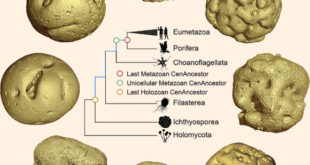
Complex animals evolved from single-celled ancestors, before diversifying into 30-40 distinct anatomical designs. When and how this major evolutionary transition occurred is the focus of intense debate. Now, an international team of researchers from the United Kingdom, China and Switzerland has found evidence that a key step in this transition …
Read More »Entomologist Discovers New Ant Species in His Own Backyard
Dr. John Longino, an ant expert in the Department of Biology at the University of Utah, has discovered a new ant species in an urban yard in Salt Lake City, Utah. Strumigenys ananeotes. Image credit: Jack Longino / University of Utah. In August 2018, Dr. Longino caught a glimpse of …
Read More »Silver-Backed Chevrotain Rediscovered in Vietnam
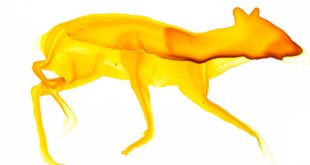
The silver-backed chevrotain (Tragulus versicolor), a deer-like species the size of a rabbit or small cat, has been rediscovered by an international team of researchers from Global Wildlife Conservation and elsewhere. Also called the Vietnamese mouse-deer, the ungulate (hoofed animal) had not been seen in Vietnam since 1990. The rediscovery …
Read More »Study: Anemonefish Can See Ultraviolet Light
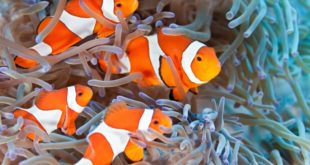
The Great Barrier Reef anemonefish (Amphiprion akindynos) can see ultraviolet light and may use it as a ‘secret channel’ to find both friends and food, according to new research. The Great Barrier Reef anemonefish (Amphiprion akindynos) at Siaes Tunnel, Palau. Image credit: Lux Tonnerre / CC BY 2.0. Anemonefish, also …
Read More »Plants’ Reaction to Rain is Close to Panic, Study Shows
Complex chemical signals are triggered when water lands on a plant to help it prepare for the dangers of rain, according to a new study published in the Proceedings of the National Academy of Sciences. Van Moerkercke et al made the surprising discovery that a plant’s reaction to rain is …
Read More »White Sharks Choose Who They Hang With, New Study Reveals
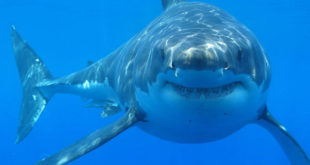
White sharks (Carcharodon carcharias) are top marine predators that are typically solitary but can also form seasonal aggregations around seal colonies to feed. Using a combination of photo-identification and network analysis, a team of researchers investigated the co-occurrence patterns of the marine predators. The study showed, for the first time, …
Read More »Marine Biologists Discover New Species of Octocoral
A previously unknown species of coral has been discovered in Hannibal Bank, a guyot seamount off Pacific Panama. Psammogorgia pax. Image credit: Hector Guzman / Smithsonian Tropical Research Institute. Named Psammogorgia pax, the newly-discovered species is a white and fan-shaped octocoral. The colony is made of microscopic bone-like calcium carbonate …
Read More »
#Bizwhiznetwork.com Innovation ΛI |Technology News