Archaeological excavations at Abydos, Egypt, have revealed the remains of a subterranean boat burial dating to the reign of the pharaoh Senwosret III (c. 1850 BC), says an international team of archaeologists led by Dr. Josef Wegner of the Penn Museum, University of Pennsylvania. Top: interior of the boat building. …
Read More »Swedish Researchers Find Submerged Mesolithic Settlement
A team of researchers headed by Lund University’s Professor Dan Hammarlund has uncovered an exceptionally well-preserved Mesolithic site off the Baltic Sea coast at Haväng in south-eastern Sweden. They believe the location was a lagoon environment where ancient humans lived during parts of the year. 9,000 year-old antler pick axe; …
Read More »Early Evidence of Dairying Discovered along Mediterranean Coast
An international research group has found evidence that humans have been utilizing milk and dairy products across the northern Mediterranean region from the onset of agriculture – approximately 9,000 years ago. C.D. Spiteri et al discovered widespread evidence of prehistoric milk production in southern Europe. Image credit: Samuel Daniell. The …
Read More »Ancient Zapotecs Kept and Bred Turkeys for Meat, Eggs, Religious Purposes
A team of archaeologists excavating the Mitla Fortress, a Zapotec site in Oaxaca, Mexico, dating to the Classic to Early Postclassic period (300-1200 CE), has uncovered the remains of juvenile and adult turkeys, whole eggs, and numerous eggshell fragments in domestic refuse and ritual offering contexts. They say this is …
Read More »Turkeys Were Part of Native American Life Centuries before First Thanksgiving
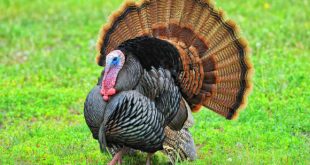
According to a new study by Florida State University researchers, Native Americans were keeping eastern wild turkeys (Meleagris gallopavo silvestris) as early as 1200 – 1400 CE. A wild turkey (Meleagris gallopavo). Image credit: Vince Pahkala / CC BY-SA 3.0. Researchers knew that turkeys had been a part of Native …
Read More »Indus Civilization Farmers Cultivated Rice Over 4,000 Years Ago, Archaeological Evidence Suggests
New research on three archaeological sites of the famed Indus Valley civilization (3000-1500 BC) in north-west India has revealed that domesticated rice farming in South Asia began far earlier than previously believed, and may have developed in tandem with — rather than as a result of — rice domestication in …
Read More »Middle Eastern Bitumen Found in Early Medieval Buried Ship in UK
Bitumen — a rare, tar-like material — from the Middle East is present in the 7th century Anglo-Saxon ship-burial at Sutton Hoo, Suffolk, UK, according to a study led by Dr. Pauline Burger of the British Museum, London. Model of the Sutton Hoo ship-burial. The placement of the burial chamber …
Read More »Mummified Remains Identified as Queen Nefertari, Pharaoh Ramesses II’s Royal Spouse
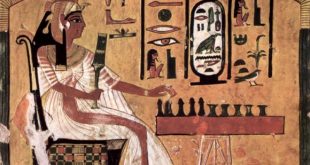
A pair of mummified knees on display in the Egyptian Museum in Turin, Italy, belongs to Egyptian Queen Nefertari, the favorite wife of Pharaoh Ramesses II, according to a research team led by University of Zurich scientist Prof. Frank Rühli. Egyptian Queen Nefertari playing senet, one of the world’s earliest …
Read More »World’s Very First Polluted River? Scientists Find Evidence of Ancient Metallurgical Activity in Jordan
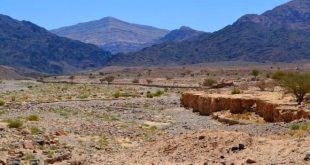
A research team led by Liverpool John Moores University scientists has discovered what could be the world’s very first polluted river, contaminated 7,000 years ago. In a now-dry riverbed in the Faynan Orefield of southern Jordan, the team found evidence of anthropogenic copper pollution. Wadi Faynan, where J.P. Grattan et …
Read More »Archaeologists Find Previously Unknown Ancient City in Greece
An international team of archaeologists from Sweden, Greece and the United Kingdom is exploring the ruins of a previously unknown ancient city at the village of Vlochos, municipality of Palamas, central Greece. The city’s acropolis is barely visible during a cloudy day on the Thessalian plains. Image credit: Swedish Institute …
Read More »
#Bizwhiznetwork.com Innovation ΛI |Technology News