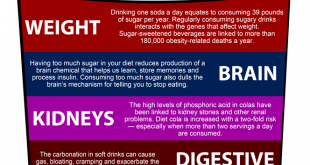
Researchers using data from the Framingham Heart Study (FHS), a joint project of the National Heart, Lung and Blood Institute and Boston University, have shown that people who more frequently consume sugary beverages such as sodas and fruit juices are more likely to have poorer episodic memory, smaller hippocampal and …
Read More »Study: Concentrated Blueberry Juice Improves Brain Function in Older Adults
New research from the University of Exeter, UK, has demonstrated that regular consumption of concentrated blueberry juice improves brain function in healthy older adults. Supplementation with an anthocyanin-rich blueberry concentrate improved brain perfusion and activation in brain areas associated with cognitive function in healthy older adults. Image credit: Xicocool. In …
Read More »Researchers Identify Two Genes Responsible for Brain’s Aging
A duo of researchers at Columbia University has identified two genes (TMEM106B and GRN) that greatly impact normal brain aging, starting at around age 65. This drawing shows several of the most important brain structures. Image credit: National Institute for Aging. “If you look at a group of seniors, some …
Read More »Scientists Identify Brain-Signaling Molecule that Triggers Fat Burning
A research team led by Scripps Research Institute scientist Dr. Supriya Srinivasan has identified a brain hormone that appears to trigger fat burning in the gut. Model depicting the FLP-7/NPR-22 neuroendocrine axis that underlies the 5-HTergic control of body fat loss. In the nervous system, an integrated 5-HT and octopaminergic …
Read More »Study: Brain Produces Fructose from Glucose
According to a new study by Yale School of Medicine researchers, fructose is converted in the human brain from glucose. The finding, published in the journal JCI Insight, raises questions about fructose’s effects on the brain and eating behavior. Fructose, a simple sugar, is generated in the human brain, according …
Read More »Thylacine Had Brain Structure Suited to Predatory Life Style
A duo of researchers from the United States and Australia has used an imaging technique to reconstruct the brain architecture and neural networks of the thylacine (Thylacinus cynocephalus), the most iconic animal of Tasmania. A pair of thylacines, a male and female, c. 1905. Image credit: Smithsonian Institutional Archives / …
Read More »Paleontologists Find Fossilized Dinosaur Brain Tissue
A strange brown pebble found near Bexhill in Sussex, UK, has been identified as the first known example of fossilized brain tissue from a dinosaur. Brain endocast of an iguanodontian dinosaur found in 133 million year old fluvial sediments of the Wealden at Bexhill, Sussex, UK. Image credit: Jamie Hiscocks. …
Read More »New Study Spotlights Brain Region Responsible for Placebo Response in Pain
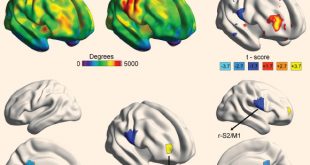
A Northwestern University-led team of researchers has identified a region in the brain responsible for the ‘placebo effect’ in pain relief, when a fake treatment actually results in substantial reduction of pain. In the study, whole-brain degree count maps, collected before the start of treatment, were used to identify potential …
Read More »Long-Term Marijuana Use Blunts Brain’s Reward System, Say Researchers
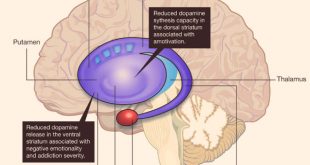
Regular use of cannabis over many years lowers levels of dopamine, a key chemical in the brain’s reward center, says an international team of researchers led by Imperial College London’s Professor Oliver Howes. Cannabis use in humans is associated with reduced dopamine in the striatum. PET studies have shown lower …
Read More »Researchers find no evidence ‘brain training’ games offset aging, cognitive decline
Several years ago, so-called “brain training” games from companies like Luminosity were all the rage. The various companies that brought these products to market claimed they could be used to offset the aging process by slowing or even reversing age-related cognitive declines. In 2014, two groups of scientists released two …
Read More »
#Bizwhiznetwork.com Innovation ΛI |Technology News