Paleontologists in Lebanon have discovered the extremely well-preserved fossilized remains of a previously unknown Cretaceous-period flying reptile. Life reconstruction of Mimodactylus libanensis. Image credit: Julius T. Csotonyi. Pterosaurs were highly successful flying reptiles — not dinosaurs, as they’re commonly mislabeled — that lived at the same time as nonavian dinosaurs, …
Read More »Study: Humans and Climate Change Drove Australian Megafauna to Extinction
Ancient Australia’s super-sized animals, the megafauna, became extinct about 42,000 years ago, but the role of humans in their demise has been debated for decades. New research challenges the notion built from previous studies that our species was the principal driver of extinctions in Australia, and that climate change was …
Read More »Paleontologists Find Fossils of Six New Dragonfly Species
Six new species of dragonflies that lived about 50 million years ago (early Eocene epoch) have been identified from fossils found in the Okanagan Highlands, an elevated hilly plateau area in British Columbia, Canada, and the U.S. state of Washington. Ypshna brownleei, an image reversed left/right so that wing apices …
Read More »Cretaceous-Period Mammal Had Bizarre Middle Ear
Paleontologists in China have unearthed a nearly complete skeleton of a previously unknown Cretaceous mammal species with well-preserved middle ear bones. A life reconstruction of the Cretaceous multituberculate Jeholbaatar kielanae. Image credit: Yong Xu. The ancient creature is a multituberculate mammal (order Multituberculata), a distant relative of today’s rodents. Named …
Read More »Majungasaurus Replaced All Its Teeth Every Two Months: Study
Majungasaurus, a carnivorous dinosaur that lived approximately 70 million years ago (Cretaceous period) in what is now Madagascar, grew new teeth roughly 2 to 13 times faster than those of other predatory dinosaurs, according to new research. Two individuals of Majungasaurus chasing Rapetosaurus, with Masiakasaurus in the foreground. Image credit: …
Read More »16-Million-Year-Old Dominican Amber Reveals Springtails’ Longstanding Dispersal by Social Insects
An international team of paleontologists has announced the discovery of an ancient interaction preserved in a 16-million-year-old (Miocene period) piece of amber from the Dominican Republic: a winged termite and an ant along with 25 springtails (one of the oldest terrestrial arthropod lineages living today) attached or in close proximity …
Read More »Cretaceous Legged Snake Fossils Shed New Light on Evolution of Modern Snake Body Plan
An analysis of the first three-dimensionally preserved skulls and skeletons of the extinct legged snake Najash rionegrina shows that nearly 100 million years ago (Cretaceous period), legged snakes still had a cheekbone — also known as a jugal bone — that has all but disappeared in their modern descendants, and …
Read More »Paleontologists Unearth Another Giant Penguin in New Zealand
Paleontologists in New Zealand have uncovered a nearly complete skeleton of a giant-sized penguin that swam the oceans about 27 million years ago (Oligocene period). A reconstruction of the Kawhia giant penguin. Image credit: Simone Giovanardi. New Zealand is a key area for understanding the ancient history of penguins. Fossils …
Read More »New Dinosaur-Era Bird Discovered in Japan: Fukuipteryx prima
A new genus and species of non-ornithothoracine bird has been identified from bones collected in Japan. Life restoration of Fukuipteryx prima, a primitive bird that lived in what is now Japan about 120 million years ago. Image credit: Masanori Yoshida. The ancient bird lived approximately 120 million years ago during …
Read More »Gigantopithecus is Related to Modern-Day Orangutans, New Study Shows
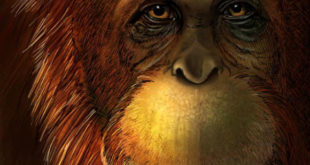
Orangutans (genus Pongo) are the closest living relatives of Gigantopithecus blacki, the biggest primate that ever walked the Earth, according to new research published in the journal Nature. Welker et al demonstrated that Gigantopithecus blacki is a sister clade to orangutans with a common ancestor about 12-10 million years ago, …
Read More »
#Bizwhiznetwork.com Innovation ΛI |Technology News