NOAA’s GOES-16 (formerly known as GOES-R), the first spacecraft in a new series of NASA-built advanced geostationary weather satellites, has sent the first high-resolution images from its Advanced Baseline Imager. This composite color full-disk visible image of the Western Hemisphere was captured from NOAA’s GOES-16 satellite on Jan. 15, 2017. …
Read More »Ancient Pueblo People Used Unexpectedly Advanced Geometry to Build Monuments
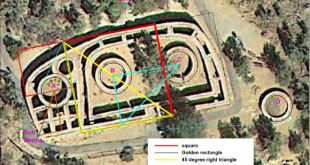
Arizona State University Professor Sherry Towers has examined the Sun Temple archaeological site at Mesa Verde National Park, Colorado, and found evidence that the site was laid out with a Golden rectangle, equilateral and Pythagorean 3:4:5 triangles. The researcher has also found evidence of a common unit of measurement underlying …
Read More »Paleontologists Find Collagen in 80-Million-Year-Old Brachylophosaurus Fossil
A team of paleontologists led by North Carolina State University researchers has isolated collagen peptides from the fossilized femur of Brachylophosaurus canadensis, a duck-billed dinosaur (hadrosaur) that lived what is now Montana around 80 million years ago. The research is published in the Journal of Proteome Research. This is a …
Read More »NOAA’s new GOES-16 weather satellite sends back stunning first images
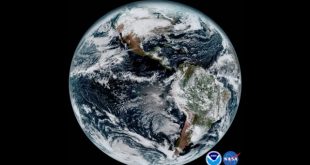
NASA and NOAA launched a new weather satellite back in November of 2016 called GOES-R. That craft is now online and sending back images, and it’s got a new (official) name. The newest and most advanced weather satellite keeping watch over America is GOES-16. To show off the impressive technological …
Read More »Siamogale melilutra: Giant Otter Fossils Reveal New Species
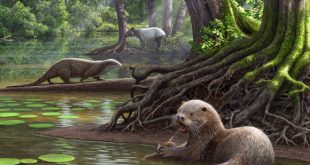
An international team of paleontologists has identified a new species of giant otter that lived in what is now China during the latest Miocene, approximately 6.2 million years ago. Artist’s reconstruction of two individuals of Siamogale melilutra, one of them feeding on a freshwater clam. The tapir in the background …
Read More »NASA’s SOFIA Observatory Collects New Data on Composition of Dwarf Planet Ceres
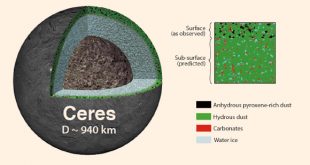
New observations from NASA’s Stratospheric Observatory for Infrared Astronomy (SOFIA) show that Ceres does not appear to have the carbon-rich surface composition that space- and ground-based telescopes previously indicated. The results were published in the Astronomical Journal on Jan. 16, 2017. Cross section of Ceres showing the surface layers that …
Read More »Humans Caused Extinction of Australia’s Prehistoric Giant Animals: New Evidence
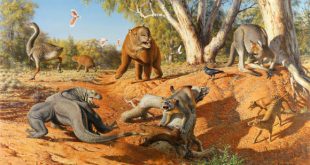
New evidence indicates the primary cause of megafaunal extinction in Australia 45,000 years ago was likely a result of humans, not climate change. A paper on the subject is published in the journal Nature Communications. A range of now extinct megafauna that was present when humans first arrived in Australia. …
Read More »Physicists Precisely Measure Magnetic Moment of Antiproton
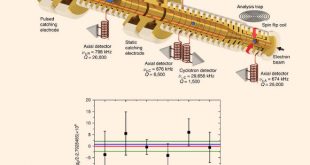
An international team of physicists led by RIKEN researcher Stefan Ulmer has found that the magnetic moment of the antiproton is extremely close to that of the proton, with six-fold higher accuracy than before. Top: schematic of the Penning trap set-up used in CERN’s BASE experiment; a cloud of antiprotons …
Read More »6 upcoming space missions worth keeping an eye on
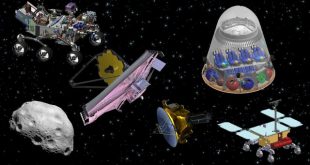
Having pretty thoroughly explored the Earth, humanity has since turned its attention to the stars. There are a myriad of missions already in the history books, and many more underway. We’re at a pivotal time in our exploration of space. With a bit of luck and science, we may soon …
Read More »SpaceX posts amazing photos of Falcon 9 landing
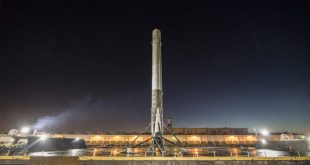
SpaceX took its time to get back on the launchpad after last year’s fueling “anomaly” that resulted in the loss of a Falcon 9 rocket and its cargo. The company conducted a months-long investigation and finally returned to space last weekend with a flawless launch and landing of the first …
Read More »
#Bizwhiznetwork.com Innovation ΛI |Technology News