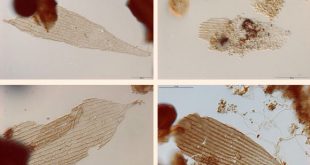
An international group of paleontologists has found the oldest fossilized remains of insects from the order Lepidoptera known to date. The fossils, mostly wing scales, are more than 70 million years older than the oldest fossils of flowering plants, and they shed new light on the so-far presumed co-evolution between …
Read More »New HiRISE Images Show 3D Structure of Martian Ice Sheets
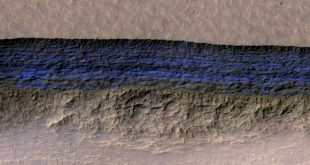
New images from the High Resolution Imaging Science Experiment (HiRISE) camera on NASA’s Mars Reconnaissance Orbiter reveal never-before-observed details about Martian ice sheets, including that some begin just a few feet below Mars’ surface and extend to depths greater than 300 feet (100 m). The findings are published in the …
Read More »Google Lunar X Prize May Expire With No Winners
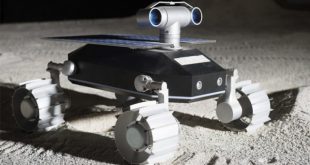
The X Prize Foundation exists to encourage the development of breakthrough technologies, and a few years ago it partnered with Google to fund a big one. The Google Lunar X Prize challenges companies to send a robotic rover to the moon. The foundation is ready to pay up to $30 …
Read More »Fossils Reveal Giant New Species of Burrowing Bat: Vulcanops jennyworthyae
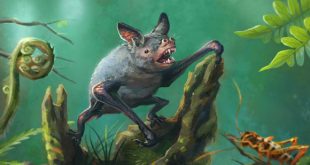
Paleontologists say they’ve found the fossilized remains of a new genus and species of bat that lived in New Zealand between 19 and 16 million years ago (Early Miocene epoch). An artist’s impression of the New Zealand greater short-tailed, or burrowing, bat (Mystacina robusta) that went extinct last century. Vulcanops …
Read More »Scientists Find Primordial Organic Matter in Two Meteorites
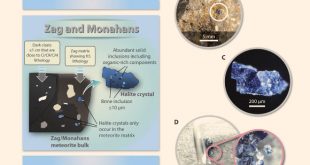
A team of researchers from the United States, UK and Japan has found liquid water and a mix of complex organic compounds in 4.5-billion-year-old salt crystals preserved in two unique meteorites, Zag and Monahans, which separately crashed to Earth in 1998. Zag/Monahans meteorites and their salt (halite) crystals: (A) diagram …
Read More »Simple Cell Contains 42 Million Protein Molecules, Biologists Say
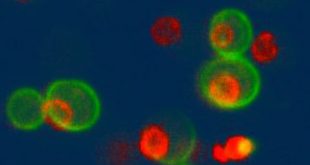
There are approximately 42 million protein molecules in a simple cell, according to University of Toronto’s Professor Grant Brown and co-authors. Yeast cells expressing proteins that carry green and red fluorescent tags to make them visible. Image credit: Brendan Ho. Proteins make up our cells and do most of the …
Read More »Common Treeshrew is Evolutionary Rule-Breaker, Researchers Say
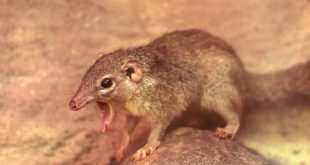
The common treeshrew (Tupaia glis) — a small mammal native to Thailand, Malaysia, and Indonesia — defies two widely tested rules that describe patterns of geographical variation within species: the island rule and Bergmann’s rule, according to a research team led by Yale University Professor Eric J. Sargis. The common …
Read More »Research Shows How Alcohol Damages Stem Cell DNA
A team of researchers from the Wellcome Trust Sanger Institute, the MRC Laboratory of Molecular Biology and the University of Cambridge, UK, has shown how alcohol damages chromosomes and mutates stem cells, helping to explain why drinking alcohol increases the risk of developing seven types of cancer. There are many …
Read More »Lasers Used to Create Negative Mass Particles
All the matter you’ve ever interacted with has mass, and as such it obeys the standard laws of motion as enunciated by Newton centuries ago. If you push something, it moves in the direction you push it. However, matter with negative mass would do the opposite. It sounds like wacky …
Read More »Bonnethead Sharks Consume and Digest Seagrass
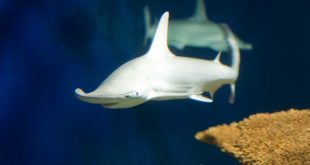
A small coastal shark called the bonnethead shark (Sphyrna tiburo) eats copious amounts of seagrass (Thalassia testudinum) and has adaptations in its digestive system to process vegetation, according to new research. Leigh et al investigated the digestive function of bonnethead sharks in order to determine whether they can digest and …
Read More »
#Bizwhiznetwork.com Innovation ΛI |Technology News