December 27, 2016
Genetics
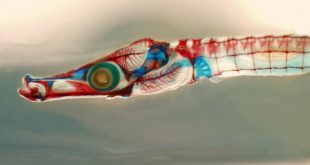
A team of scientists from the University of Oregon and Texas AM University has sequenced and explored the genome of the gulf pipefish (Syngnathus scovelli), a fish species abundant in seagrass beds of the Gulf of Mexico. The team published its results online Dec. 20 in the journal Genome Biology. …
Read More »
December 24, 2016
Genetics
The high quality genome sequence of the dry jujube cultivar ‘Junzao,’ along with sequences from trees throughout its range, have illuminated the domestication history of this popular Asian fruit tree. ‘Junzao’ jujube in Xinjiang, China. Image credit: Xingang Li. The Chinese jujube (Ziziphus jujuba) is one of the oldest cultivated …
Read More »
December 22, 2016
Genetics
In the Arctic, the Inuits have adapted to cold and a seafood diet. After the first genomic analysis of Greenlandic Inuits, a region in the genome containing two genes (TBX15 and WARS2) has now been scrutinized by researchers. Denisovans were probably dark-skinned, unlike the pale Neandertals. Image credit: Mauro Cutrona. …
Read More »
December 16, 2016
Genetics
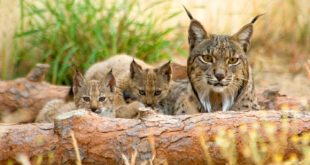
A team of researchers in Spain has successfully sequenced and analyzed the genome of the Iberian lynx (Lynx pardinus), the world’s most endangered feline and a unique example of a species on the brink of extinction. The Iberian lynx (Lynx pardinus): a female lynx with two cubs. Image credit: Centre …
Read More »
December 14, 2016
Genetics
A team of researchers at Linköping University in Sweden has identified two genomic regions and five candidate genes associated with dog’s human-directed social behaviors. Interestingly, four of these genes are also related to social behavior disorders in humans. The work by M.E. Persson et al is the first genome-wide study …
Read More »
December 14, 2016
Genetics
The first comprehensive genomic study of Indigenous Australians has revealed that they are indeed the direct descendants of Australia’s earliest settlers and diverged from their Papuan neighbors about 37,000 years ago. The study also confirmed that all modern non-African populations are descended from a single wave of migrants, who left …
Read More »
December 14, 2016
Genetics
A group of researchers in the United Kingdom has identified a set of gene families whose sizes are positively associated with an expanded neocortex — the region of the brain that is involved in higher cognitive behaviors such as language and decision-making, providing new insights into neocortex evolution. An anatomical …
Read More »
December 14, 2016
Genetics
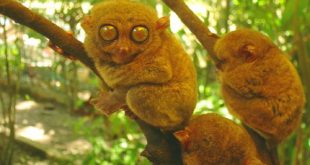
An international team of researchers from the United States and Germany today reports having sequenced and annotated the genome of the Philippine tarsier. The team’s results place tarsiers on an important branch of the primate evolutionary tree — along the same branch that leads to humans, monkeys and great apes. …
Read More »
December 14, 2016
Genetics
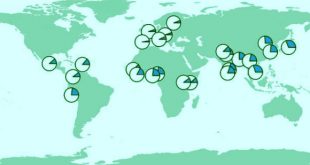
Pie charts show the proportion of chromosomes within different populations worldwide that carry a non-working copy of the FLG gene, a primary risk factor for eczema. Even in East Asia, where the rates are high, the scientists found no evidence that preserving this genetic mutation has an evolutionary benefit to …
Read More »
December 14, 2016
Genetics
Twenty-three new genes involved in risk for autoimmune vitiligo have been identified by an international group of scientists led by the University of Colorado School of Medicine. UV photograph of a hand with vitiligo. Image credit: Chip Bobbert / CC BY-SA 4.0. Vitiligo is a chronic condition in which melanocytes …
Read More »
 #Bizwhiznetwork.com Innovation ΛI |Technology News