Genetics

Geneticists Identify New Extreme Longevity Variants
An international team of researchers from the United States and Italy has identified new genetic variants associated with extreme survival and reduced risks for cardiovascular and Alzheimer’s diseases. Schematic of the analyses conducted to discover longevity associated variants (LAV), LAV with significant joint effect on extreme longevity (jLAV), and LAV …

Read More »

DNA Study Sheds Light on Evolution of Dog Breeds

Genetic material from 161 modern breeds helped a team of researchers at the National Human Genome Research Institute (NHGRI) of the National Institutes of Health assemble the most comprehensive evolutionary tree of dogs. The results are published in the journal Cell Reports. Representatives from each of the 23 clades of …

Read More »

Researchers Sequence Barley Genome

The International Barley Genome Sequencing Consortium, which is led by Dr. Nils Stein of the Leibniz Institute of Plant Genetics and Crop Plant Research, Germany, has mapped the entire genome of barley (Hordeum vulgare), the world’s fourth most important cereal crop after wheat, rice and maize. The research appears in …

Read More »

Scientists Use CRISPR-Cas9 to Create Red-Eyed Mutant Wasps

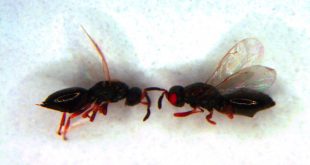
Genetic scientists from the University of California, Riverside, and the W.M. Keck Science Department of Claremont McKenna, Pitzer and Scripps Colleges, have managed to create a strain of red-eyed mutant wasps. Red-eyed Nasonia vitripennis. Image credit: Li et al, doi: 10.1038/s41598-017-00990-3. The red-eyed wasps were created to prove that CRISPR …

Read More »

Researchers Identify ‘Night Owl’ Gene Variant

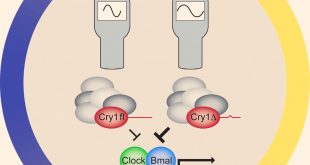
An international team of scientists led by the Rockefeller University has discovered that a variant of the human gene CRY1 (cryptochrome circadian clock 1) slows the internal biological clock, which dictates rhythmic behavior such as sleep/wake cycles. The study was published in the April 6 issue of the journal Cell. …

Read More »

‘Sleep Gene’ Identified: FABP7

An international team of scientists from the United States and Japan has seen how a particular gene, called the fatty acid binding protein 7 (FABP7), is involved in the quality of sleep experienced by three different animals, including humans. The study was published in the April 5, 2017 issue of …

Read More »
Bizwhiznetwork Consultation