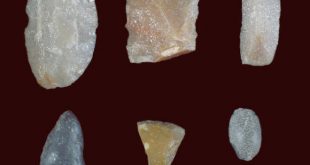
Early Homo sapiens arrived in South America earlier than believed, new research shows. Sample of stone tools (scrapers, flakes and bipolar cobble) found at the Arroyo Seco 2 site. Image credit: G.G. Politis et al. The conclusion comes from the analysis of ancient tools and bones from a variety of …
Read More »Ancient Zapotecs Kept and Bred Turkeys for Meat, Eggs, Religious Purposes
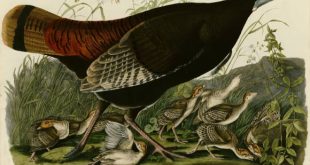
A team of archaeologists excavating the Mitla Fortress, a Zapotec site in Oaxaca, Mexico, dating to the Classic to Early Postclassic period (300-1200 CE), has uncovered the remains of juvenile and adult turkeys, whole eggs, and numerous eggshell fragments in domestic refuse and ritual offering contexts. They say this is …
Read More »American Alligator’s Lineage is More Ancient than Previously Thought
According to new research, American alligators (Alligator mississippiensis) have remained virtually untouched by evolutionary change for at least 8 million years — up to 6 million years older than previously thought. American alligator (Alligator mississippiensis). Image credit: Gareth Rasberry / CC BY-SA 3.0. “If we could step back in time …
Read More »Archaeologists Find Previously Unknown Ancient City in Greece
An international team of archaeologists from Sweden, Greece and the United Kingdom is exploring the ruins of a previously unknown ancient city at the village of Vlochos, municipality of Palamas, central Greece. The city’s acropolis is barely visible during a cloudy day on the Thessalian plains. Image credit: Swedish Institute …
Read More »Researchers Find Ancient Proteins in 3.8-Million-Year-Old Ostrich Eggshells
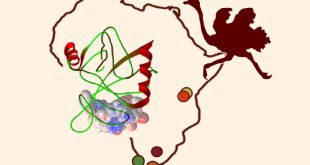
A multinational team of researchers has uncovered fossil proteins dating back 3.8 million years — a discovery that will enhance future understanding of ancient organisms. The team has identified fossil proteins in 3.8 million year-old ostrich eggshells. Image credit: Matthew Collins. Fragments of ancient ostrich eggshells are abundant in Africa, …
Read More »Ancient Melanosomes, Beta-Keratin Found in Fossilized Feathers of Early Cretaceous Bird
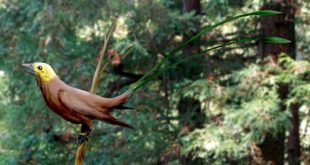
An international team of paleontologists has found evidence of beta-keratin and melanosome preservation in a 130-million-year-old specimen of the Early Cretaceous bird Eoconfuciusornis. Eoconfuciusornis zhengi. Image credit: Nobu Tamura / CC BY 3.0. Eoconfuciusornis, a genus of crow-sized primitive birds from the Early Cretaceous Dabeigou and Huajiying Formations of China, …
Read More »Ancient DNA Provides New Insights into Early Stages of Maize Domestication
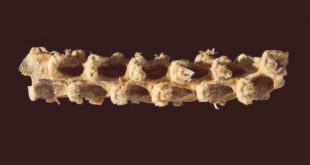
According to an international team of scientists who have sequenced the genome of a 5,310-year-old maize cob from the Tehuacan Valley, the maize (Zea mays) grown in central Mexico more than five millennia ago was genetically more similar to modern maize than to its wild counterpart. A 5,310-year-old maize cob …
Read More »Aleppo’s deserted ancient city filmed from above
12 December 2016 Last updated at 16:47 GMT Drone footage reveals the extent of the devastation in eastern Aleppo.
Read More »
#Bizwhiznetwork.com Innovation ΛI |Technology News