Rulers of Ancient Egypt’s Enigmatic Hyksos Dynasty Were Immigrants, Not Invaders New research led by Bournemouth University archaeologists supports the theory that the Hyksos, the rulers of the 15th Dynasty of ancient Egypt, were not from a unified place of origin, but Western Asiatics whose ancestors moved into Egypt during …
Read More »Plant-Eating Dinosaur
A new genus and species of long-necked herbivorous dinosaur that lived during the Triassic period has been identified from fossils found in northern Switzerland. Schleitheimia schutzi (left) and Plateosaurus (right). Image credit: Beat Scheffold. Schleitheimia schutzi lived approximately 210 million years ago (Triassic period) in what is now Switzerland. …
Read More »Brain and Heart Health
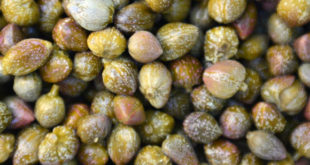
Eating Pickled Capers May Help Improve Brain and Heart Health A duo of researchers from the School of Medicine at the University of California, Irvine has discovered that a compound commonly found in pickled capers, which are the immature flower buds of the caper bush (Capparis spinosa), can directly regulate …
Read More »Heaviest Soaring Bird
In a new study, a team of researchers from the United Kingdom, Germany and Argentina deployed high-tech flight-recorders on the world’s heaviest extant soaring bird, the Andean condor (Vultur gryphus), to assess the extent to which this species can operate without resorting to powered flight. Their data revealed the lowest …
Read More »A Species of Chameleons
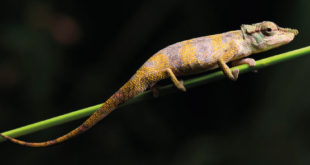
An international team of herpetologists from Germany and Madagascar has discovered and described three new species of chameleons from the Calumma nasutum species group. Calumma emelinae. Image credit: Prötzel et al, doi: 10.26049/VZ70-1-2020-3. “Madagascar is a paradise for nature lovers, since most of the land vertebrate species are only …
Read More »Telomere To Telomere
Researchers Produce First ‘Telomere-To-Telomere’ Sequence of Human Chromosome A team of U.S. and U.K. scientists has generated the end-to-end gapless DNA sequence of the human X chromosome. A telomere is the end of a chromosome that protects the interior of a chromosome from damage during cell division. Image credit: Darryl …
Read More »85 Million Years Younger
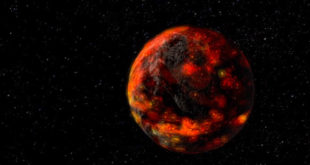
Earth’s only natural satellite formed 4.425 billion years ago — around 85 million years later than previous estimates, according to a new modeling study by researchers from the German Aerospace Center (DLR), the Technische Universität Berlin and the Institut für Planetologie at the University of Münster. When the Moon …
Read More »New AI Calculates Distant
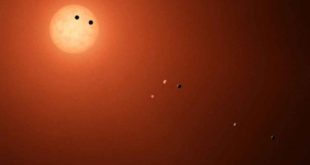
Planet Orbits 100,000 Times Faster We live in a solar system of eight planets, none of which collide with each other, which is nice for us. How often do planets in other solar systems smash into each other, though? A new AI designed by Princeton researchers can crunch the numbers …
Read More »An Ancient Black Hole
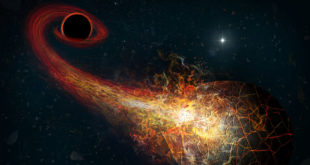
‘Planet Nine’ Might Be an Ancient Black Hole We tend to think of the solar system as our little corner of the universe, but there are still a lot of things we don’t know about it. For example, what’s perturbing the orbits of small space rocks out past the orbit …
Read More »Rover on Atlas V Rocket
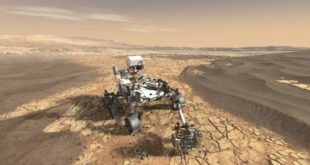
NASA Mounts Perseverance Mars Rover on Atlas V Rocket It’s been a long road, but NASA’s Perseverance rover is ready for its trip to Mars. The agency packaged the robot up inside its payload fairing and attached it to an Atlas V rocket this week. Now, all we need is …
Read More »
#Bizwhiznetwork.com Innovation ΛI |Technology News