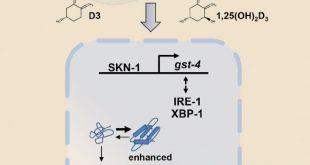
A new animal study published in the journal Cell Reports shows vitamin D engages longevity genes to increase lifespan and prevent the accumulation of toxic proteins linked to age-related chronic diseases. Mark et al demonstrate that vitamin D promotes protein homeostasis and slows aging in the nematode C. elegans. Image …
Read More »Brazilian Free-Tailed Bat is Fastest Flying Animal, New Study Says
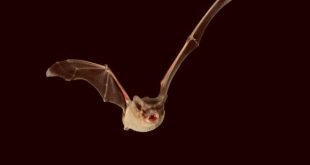
A study published in the journal Royal Society Open Science shows that the Brazilian free-tailed bat can achieve flight speeds of 100 mph (160 km per hour) — faster than those previously documented for any bat or bird. The Brazilian free-tailed bat (Tadarida brasiliensis) can reach record-breaking speeds, according to …
Read More »Only Half of Chromosome is DNA, New Study Reveals
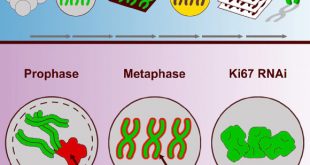
DNA makes up only half of the material inside chromosomes, according to a new study published in the journal Molecular Cell. Up to 47% of their structure is a mysterious sheath that surrounds the genetic material. Booth et al. develop a microscopy method called 3D-CLEM. Using this approach, they find …
Read More »Plutonium Acts Like Ions in a Salt, New Study Shows
Plutonium, a heavy, silvery metal with 15 isotopes that is produced by the neutron irradiation of natural uranium, is formidably complex element that does not always act as expected. New research published in the journal Physical Review B shows that plutonium does not share electrons when it bonds with fluorine …
Read More »Study: Extremely Low-Oxygen Environment Leads to Heart Regeneration in Adult Mice
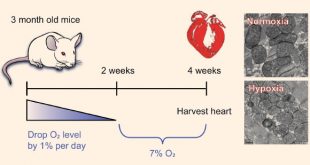
An international team of scientists from Japan, UK and the United States has been able to regenerate heart muscle by placing adult mice in a low-oxygen environment. Schematic of gradual induction of severe hypoxemia. Image credit: Yuji Nakada et al, doi: 10.1038/nature20173. The team, led by University of Texas Southwestern …
Read More »New Study Spotlights Brain Region Responsible for Placebo Response in Pain
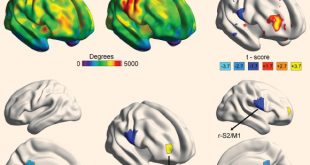
A Northwestern University-led team of researchers has identified a region in the brain responsible for the ‘placebo effect’ in pain relief, when a fake treatment actually results in substantial reduction of pain. In the study, whole-brain degree count maps, collected before the start of treatment, were used to identify potential …
Read More »New Research Provides Path to Study Diabetic Complications
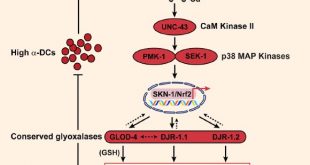
An international team of scientists from the United States and China has found a sensor for the reactive molecules linked to diabetic complications. The study, done in the nematode worm Caenorhabditis elegans, provides particular promise for those suffering from painful diabetes-related nerve damage. TRPA-1/TRPA1 activation via a-dicarbonyls (a-DCs) is relayed …
Read More »Active Marijuana Use May Double Risk of Stress Cardiomyopathy, Study Says
According to a new study by researchers at St. Luke’s University Health Network, active cannabis use may double the risk of stress cardiomyopathy, a sudden, usually temporary, weakening of the heart muscle that reduces the heart’s ability to pump, leading to chest pain, shortness of breath, dizziness and sometimes fainting. …
Read More »Study: High Blood Pressure Affects Over a Billion People Worldwide
As many as 1.13 billion people in the world have high blood pressure, says a new study published in the journal The Lancet. The study reveals the number of people with high blood pressure has nearly doubled in four decades. Image credit: Gerald Oswald. Researchers from an international consortium called …
Read More »Study Says Avoiding the Sun is an Emerging Health Problem
Americans are increasingly at risk of insufficient sun exposure, according to a landmark study published this week in the Journal of Dermato-Endocrinology. According to Hoel et al, the message of sun avoidance must be changed to acceptance of non-burning sun exposure sufficient to achieve serum 25(OH)D concentration of 30 ng/mL …
Read More »