Title tags are a meaningful on-page ranking factor and are among the most influential factors in determining click-through rate (CTR) from search engine results pages. Higher CTR not only drives more traffic immediately, it also improves organic rankings when combined with good on-site metrics. Title tag CTR is also difficult …
Read More »Study: Concentrated Blueberry Juice Improves Brain Function in Older Adults
New research from the University of Exeter, UK, has demonstrated that regular consumption of concentrated blueberry juice improves brain function in healthy older adults. Supplementation with an anthocyanin-rich blueberry concentrate improved brain perfusion and activation in brain areas associated with cognitive function in healthy older adults. Image credit: Xicocool. In …
Read More »Study: Uganda’s Ngogo Chimpanzees Have Surprisingly Long Life Expectancies
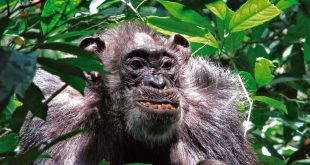
A 20-year demographic study of a relatively undisturbed and exceptionally large community of eastern chimpanzees (Pan troglodytes schweinfurthii) at Ngogo, Kibale National Park, southwestern Uganda, has revealed that our close primate relatives can lead surprisingly long lives in the wild. A member of the Ngogo community of chimpanzees in Uganda’s …
Read More »New Study Confirms Sharks Arose from Acanthodian Fishes
A new study led by the American Museum of Natural History (AMNH) provides the strongest evidence to date that sharks arose from a group of bony fishes called Acanthodii (acanthodians, or ‘spiny sharks’). General view of the Doliodus problematicus specimen, showing the ventral part of the individual viewed in dorsal …
Read More »Study: Spiders Eat 400-800 Million Tons of Insects and Other Prey Annually
According to a new study published in The Science of Nature, the annual prey kill of the global spider community is in the range of 400-800 million metric tons (fresh weight), with insects and springtails composing more than 90% of the captured prey. Jumping spider Phidippus mystaceus feeding on a …
Read More »New study confirms Google doesn’t use Chrome browser data to discover new URLs
Stone Temple Consulting has published a new study supporting Google’s claim that it doesn’t use Chrome browser data for discovering new URLs for its search index. The test was pretty simple: They created a “couple of pages that Google didn’t know about,” then they had “a bunch of people visit …
Read More »Lactobacilli Can Reverse Depression Symptoms, Study Finds
Lactobacilli, a group of probiotic bacteria that ferment milk into yogurt and aid in the digestive process in the body, can reverse depression-like behavior and anxiety in mice, according to a new study published in the journal Scientific Reports on March 7, 2017. Lactobacillus reuteri bacteria (blue). Image credit: Alistair …
Read More »Study: Caffeine, 23 Other Compounds Boost Dementia-Fighting Enzyme
A team of scientists at Indiana University, Bloomington, has identified 24 compounds — including caffeine, retinoic acid, and rolipram — with the potential to boost an enzyme in the brain shown to protect against dementia. Indiana University Professor Hui-Chen Lu and co-authors have identified 24 compounds that increase the brain’s …
Read More »Fossil Study Rewrites Dinomyidae Family Tree
Adult and juvenile fossil specimens of Isostylomys laurdillardi, a giant rodent that lived in South America between 9 and 6.8 million years ago (Miocene epoch), have been found by paleontologists, raising questions about classification within the rodent family Dinomyidae. Isostylomys laurdillardi. Image credit: Andres Rinderknecht et al. Dr. Andres Rinderknecht …
Read More »Giant Pterosaurs Ruled Late Cretaceous Romania, Says New Study
Hatzegopteryx, a flying reptile with a 10-m wingspan and a mass of 220 kg, was the dominant predator in what is now Romania between 72-66 million years ago, according to a study by paleontologists in the UK. Hatzegopteryx, depicted here as a short-necked, powerful predator, consumes the dwarf dinosaur Zalmoxes …
Read More »