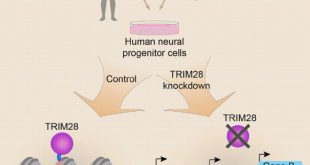
About 8% of the human genome is composed of endogenous retroviruses. According to a new study published in the journal Cell Reports, these retroviruses may have played a significant role in the development of the human brain as well as in various neurological diseases, such as ALS, schizophrenia and bipolar …
Read More »Hummingbirds Process Motion in Unique Way, Study Shows
According to new research published in the journal Current Biology, a key area of the hummingbird brain processes motion in a unique, unexpected way. The Anna’s hummingbird (Calypte anna). Image credit: Kevin Cole / CC BY 2.0. The brain area in question is called the lentiformis mesencephali (LM), known in …
Read More »Retroviruses Originated in Ocean 450 Million Years Ago, New Study Says
Retroviruses (Retroviridae) — a family of viruses that includes pathogens such as HIV, feline leukemia, and several cancer-causing viruses — have an ancient marine origin and originated together with, if not before, their jawed vertebrate hosts nearly 450 million years ago in the Ordovician period, according to a new study …
Read More »Study Sheds New Light on Peopling of Tibet
A new analysis of Chusang, an archeological site on the high-altitude Tibetan Plateau, suggests that permanent residents may have set up camp thousands of years sooner than previously thought. These fossilized human footprints near Chusang, Tibet, were made between 13,000-7,400 years ago, according to a new analysis. Image credit: Mark …
Read More »Study: Ancient Inhabitants of Chaco Canyon Likely Relied on Imported Corn
According to a new study published in the Journal of Archaeological Science: Reports, the ancient inhabitants of Chaco Canyon likely had to import corn to feed the multitudes residing there. Pueblo Bonito, the largest great house in Chaco Canyon, New Mexico. Image credit: National Register of Historic Places / CC …
Read More »Cozy Cafés To Study At In Toronto
As both cooler weather and final exams approach, the bedroom desk often becomes a daunting and depressing place for students. Rather than slave away in the library, try cozying up at one of the many charming and unique coffee shops that Toronto has to offer. Whether you’re looking to be …
Read More »Vitamin D Improves Gut Microbiota, Study Finds
According to a study published in the journal Frontiers in Physiology, extra vitamin D can restore good bacteria in the gut, giving hope in the fight against risk factors for diabetes and heart disease. According to Danmei Su et al., vitamin D improves gut flora. Image credit: Richard Stockton College …
Read More »SearchCap: Google AMP changes, BrightLocal study & PPC mistakes
Below is what happened in search today, as reported on Search Engine Land and from other places across the web. From Search Engine Land: 6 common PPC reporting mistakes that can make you look terribleDec 21, 2016 by Frederick Vallaeys Your job is hard enough — don’t sabotage yourself by …
Read More »Groundbreaking fMRI study finds 4 distinct neurological subtypes of depression
New research from Weill Cornell has isolated four distinct neurotypes of depression. But its knock-on effects are much wider in scope. The work establishes biomarkers for depression, and it sheds new light on the physical underpinnings of psychological disease. The study captured fMRI brain scans from more than a thousand …
Read More »Study: Drop in nSR100 Protein Levels Causes Autistic-Like Behavior in Mice
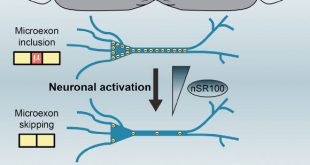
As many as 33% of autism cases could be explained by a scarcity of a protein called nSR100 in the brain, a new study in the journal Molecular Cell has revealed. Mathieu Quesnel-Vallières et al induced autistic-like behavior in mice by lowering the levels of nSR100 protein, which is important …
Read More »