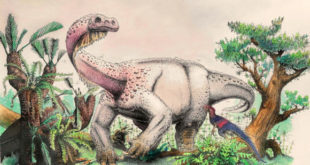
Paleontologists have discovered what they say is a completely unexpected new sauropodomorph dinosaur that lived 200 million years ago (Jurassic period) in South Africa. An artist’s reconstruction of Ledumahadi mafube foraging in the Early Jurassic of South Africa; in the foreground, Heterodontosaurus. Image credit: Viktor Radermacher, University of the Witwatersrand. …
Read More »Bahama Nuthatch: Scientists Rediscover Elusive Bird Species in the Bahamas
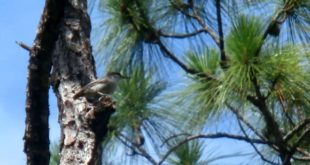
A highly endangered species of bird called the Bahama nuthatch (Sitta insularis) has been rediscovered by two international teams of ornithologists searching the island of Grand Bahama. The finding is significant because the species had been feared extinct following the catastrophic damage caused by Hurricane Matthew in 2016. But it …
Read More »Evolution Favors ‘Survival of Laziest,’ Mollusk Study Suggests
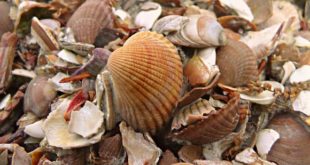
A study of Pliocene to recent bivalves and gastropods from the Western Atlantic suggests laziness might be a fruitful strategy for survival of individuals, species and even communities of species. Strotz et al focused on the high-resolution record of Pliocene to recent mollusks from the Western Atlantic. For the study, …
Read More »Two New ‘Unusual’ Fatty Acids Discovered
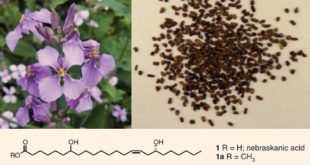
A research team led by the University of Nebraska-Lincoln and Huazhong Agricultural University has identified two new fatty acids — named Nebraskanic acid and Wuhanic acid — in the seed oil of the Chinese violet cress (Orychophragmus violaceus), a flowering plant native to central China. The discovery is reported in …
Read More »Goats Prefer Happy Human Faces, Study Says
A new study published in the journal Royal Society Open Science provides the first evidence of how goats (Capra aegagrus hircus) read human emotional expressions. Nawroth et al show that goats can discriminate human facial expressions with different emotional valences and prefer to interact with positive ones. Image credit: Filinecek. …
Read More »Wild Bottlenose Dolphins Learn from Each Other to Tail-Walk on Water
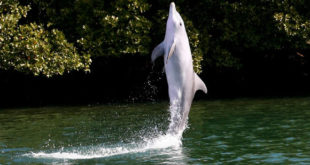
A new paper published in the journal Biology Letters describes how tail walking was learned by a single bottlenose dolphin and then copied by other dolphins in the same community, and, much like a pop fad, then faded out. Tail-walking involves a dolphin rising vertically out of the water and …
Read More »Fiordland Penguins Travel up to 4,350 Miles to Feed: Study
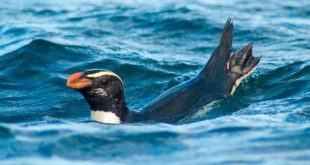
The Fiordland penguin (Eudyptes pachyrhynchus), the only crested penguin species breeding on the New Zealand mainland, is currently one of the least studied and rarest penguin species in the world. In a new study of this elusive species, an international research team led by the University of Otago tracked several …
Read More »Snakebites Decrease after Drought, Increase after Periods of High Rainfall, Shows New Study
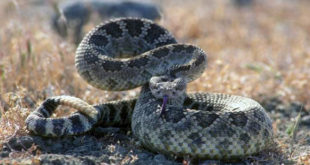
Snakebites, contrary to public opinion, increase after rainy years, not drought, according to a new study that examined two decades of rattlesnake bite history in California. The study was published online this week in the journal Clinical Toxicology. The western rattlesnake (Crotalus oreganus). Image credit: California Department of Fish and …
Read More »Researchers Discover Two New Species of Edible Truffles
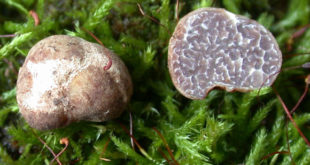
A research team led by University of Florida scientists has discovered two new species of ‘true’ truffles growing in the roots of pecan trees in the United States. Tuber brennemanii from an oak forest in the Midwest. The specimen on the left shows the rough, knobby exterior of the mushroom …
Read More »Study: Infants Use Same Gestures as Chimpanzees
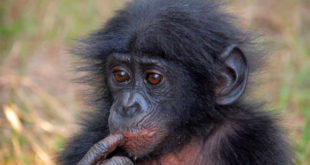
Great apes of all species — human and non-human — communicate using a combination of different types of signals: vocalizations, gestures, facial expressions and body postures. According to a new study, published in the journal Animal Cognition, one- to two-year-old human children use many of the gestures observed in great …
Read More »