The genomes of multiple East Asian populations bear the signature of a viral epidemic that occurred approximately 900 generations, or 25,000 years (28 years per generation) ago, according to a new study published in the journal Current Biology. Souilmi et al. apply evolutionary analyses to human genomic datasets to recover …
Read More »High Milk Intake
In a new meta-analysis of previous studies, a team of researchers from the United Kingdom, Australia and New Zealand found that people who regularly drank high amounts of milk had lower levels of both good and bad cholesterol, although their body mass index (BMI) levels were higher than non-milk drinkers; …
Read More »Tiny Mountains on Neutron Stars
Physicists are still arguing over whether black holes have “hair,” but we’re pretty sure neutron stars have mountains. These dead stars are extreme in every respect, from their magnetic field to gravitational influence, but the only thing extreme about the mountains is how small they are. A new analysis of …
Read More »Mountains On Neutron Stars
Physicists are still arguing over whether black holes have “hair,” but we’re pretty sure neutron stars have mountains. These dead stars are extreme in every respect, from their magnetic field to gravitational influence, but the only thing extreme about the mountains is how small they are. A new analysis of …
Read More »Floor of Jezero Crater
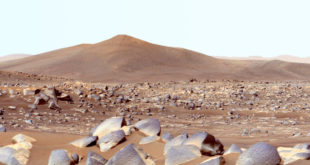
NASA’s Perseverance rover is focusing its science instruments on rocks that lay on the floor of Jezero Crater, which is located on the western edge of Isidis Planitia, a giant impact basin just north of the Martian equator. Perseverance used its dual-camera Mastcam-Z imager to capture this (enhanced) image of …
Read More »Orangutans Fruit Scarcity
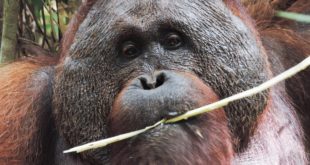
Wild Bornean orangutans (Pongo pygmaeus) catabolize muscle tissue when the availability of fruit is low, according to new research led by Rutgers University scientists; that’s remarkable because orangutans are thought to be especially good at storing and using fat for energy. A male Bornean orangutan (Pongo pygmaeus) eating non-fruit vegetation …
Read More »Ganges River Dolphins
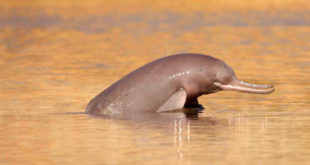
The two subspecies of the South Asian river dolphin (Platanista gangetica) — the Indus river dolphin (Platanista gangetica minor) and the Ganges river dolphin (Platanista gangetica gangetica) — should each be recognized as distinct full species, according to a new study published in the journal Marine Mammal Science. The Indus …
Read More »New Warp Drive Study
(Credit: Eduard Muzhevskyi/Getty Images) Exploring the universe in Star Trek is as easy as firing up the warp drive and zipping off to the next adventure, but real life is much more tedious without faster-than-light (FTL) travel. Physicists have speculated on the possibility of a real warp drive for …
Read More »Mammoths Co-Existed
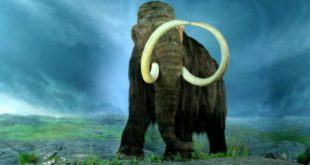
The so-called Mount Holly mammoth (Mammuthus sp.) lived approximately 12,800 years ago in what is now New England, a region comprising six states in the Northeastern United States, and potentially overlapped with the first human settlers of the region, according to new research from Dartmouth College. The woolly mammoth (Mammuthus …
Read More »Daily Caffeine Intake
Caffeine, a psychostimulant commonly used to combat high sleep pressure on a daily basis, alters gray matter structures; however, the effect appears to be temporary, according to new research from the University of Basel. Lin et al. examined whether daily caffeine intake affects human gray matter through the mediation of …
Read More »