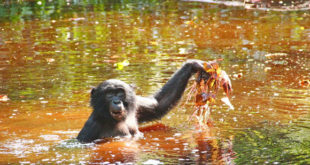
Scientists have for the first time observed wild bonobos (Pan paniscus), a hominoid species endemic to the central Congo basin, searching for and eating aquatic plants rich in iodine, a mineral nutrient which is critical for normal growth, development and functioning of both brain and body. An adult female bonobo …
Read More »Study: Gray Seals Can Copy Human Speech and Songs
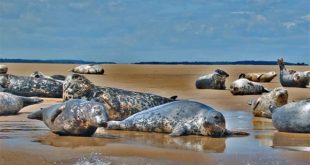
According to a new study published in the journal Current Biology, gray seals (Halichoerus grypus) can copy human speech and songs using the same sound production mechanisms as humans. A group of gray seals (Halichoerus grypus) on sands at Stiffkey, Norfolk, UK. Image credit: Duncan Harris / CC BY 2.0. …
Read More »Scientists Capture First Footage of Giant Squid in US Waters
Scientists have achieved a new first, capturing footage of a giant squid in the waters off the coast of the United States. It’s only the second time a giant squid has been captured swimming alive and on video. Dr. Edie Widder, the founder of the Ocean Research and Conservation …
Read More »Novel Anti-Inflammatory Molecule Isolated from Soil-Dwelling Bacterium
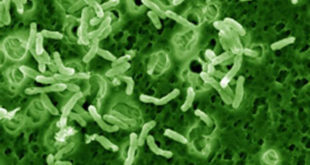
About three decades after scientists coined the term ‘hygiene hypothesis’ to suggest that increased exposure to microorganisms could benefit health, an international team of biologists from the United States, the United Kingdom and Hungary has identified an anti-inflammatory lipid in the soil-dwelling bacterium Mycobacterium vaccae that may be responsible. Mycobacterium …
Read More »Rock-Eating Shipworm Discovered in Philippines
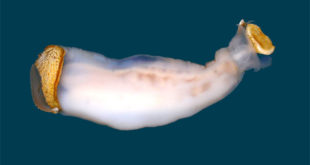
An international research team led by Northeastern University marine biologists has discovered a new genus and species of shipworm burrowing into the bedrock of the Abatan River on the Philippine Island of Bohol. Rock-boring and rock-ingesting Lithoredo abatanica shipworms live in carbonate limestone bedrock in the Abatan River on the …
Read More »Marine Biologists Identify First Narwhal-Beluga Hybrid
Narwhals (Monodon monoceros) and beluga whales (Delphinapterus leucas) are medium-sized toothed whales and the sole representatives of the Monodontidae family. They are the only toothed whales endemic to the Arctic region. While they are each other’s closest relatives and roughly equal in size, these two species differ in their morphology …
Read More »Dogs Evolved New Muscles around Eyes to Better Communicate with Humans, Study Says
Domestication shaped wolves (Canis lupus) into dogs (Canis familiaris) and transformed both their behavior and their anatomy. A new study, published in the Proceedings of the National Academy of Sciences, shows that dogs have the levator anguli oculi medialis, a muscle responsible for raising the inner eyebrow, which wolves do …
Read More »Study Provides New Insights into Biology of ‘Satiety Hormone’ Leptin
Leptin, a hormone secreted by fat cells, informs the brain about sufficiency of fuel stores. When insufficient, leptin levels fall, triggering increases in appetite. A study by researchers from Yale University School of Medicine and Harvard Medical School has demonstrated a mechanism by which low leptin stimulates food intake in …
Read More »First Multicellular Organisms Were Collections of Stem Cell-Like Cells, Research Suggests
A team of researchers from the University of Queensland and the University of Alabama has found that the first multicellular organisms probably weren’t like the modern-day sponge cells, but were more like a collection of cells that could transition into multiple types, much like modern stem cells that give rise …
Read More »Study: Bottlenose Dolphins Form Friendships through Shared Interests
According to new research, published in the published in the Proceedings of the Royal Society B, Indo-Pacific bottlenose dolphins (Tursiops aduncus) living in Shark Bay, a World Heritage Site in the Gascoyne region of Western Australia, form close friendships with other dolphins that have a common interest. An Indo-Pacific bottlenose …
Read More »