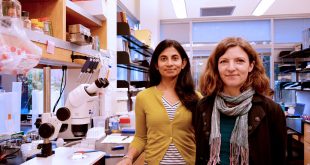
A research team led by Scripps Research Institute scientist Dr. Supriya Srinivasan has identified a brain hormone that appears to trigger fat burning in the gut. Model depicting the FLP-7/NPR-22 neuroendocrine axis that underlies the 5-HTergic control of body fat loss. In the nervous system, an integrated 5-HT and octopaminergic …
Read More »Geckolepis megalepis: New Gecko Species Has Exceptionally Large, Fish-Like Scales
A bizarre new species of the fish-scale gecko genus Geckolepis has been found living in the ‘tsingy’ karst formations of northern Madagascar. Geckolepis megalepis in life. Image credit: Frank Glaw. The Geckolepis fish-scale geckos are small- to medium sized arboreal and nocturnal lizards endemic to Madagascar and the Comoro Islands. …
Read More »Green Tea Compound Could Have Lifesaving Potential for Patients with Amyloidosis, Multiple Myeloma
The green-tea polyphenol Epigallocatechin gallate (EGCG) may be of particular benefit to patients struggling with amyloidosis and multiple myeloma, according to an international team of researchers led by Washington University in St. Louis. The research is published in the Journal of Biological Chemistry. According to Kathrin Andrich et al, the …
Read More »Supersolid: Physicists Create New State of Matter
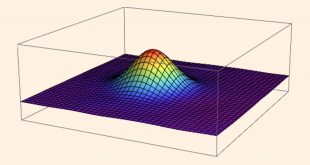
Two teams of physicists have independently created a mysterious new state of matter. The state is known as a supersolid and it combines the properties of both solid and superfluid states. Illustration of a supersolid state, in which the properties of a frictionless fluid and a crystalline state coincide. Image …
Read More »Oscillons, Gravitational Wave Factories in Very Early Universe
A team of theoretical physicists at the University of Basel, Switzerland, has found that in the very early Universe, so-called oscillons — strong localized fluctuations of the inflaton field — can act as ‘gravitational wave factories.’ According to Antusch et al, oscillons produced a characteristic peak in the otherwise broad …
Read More »Shortest-Sleeping Mammal? African Elephants Sleep Only Two Hours Per Day
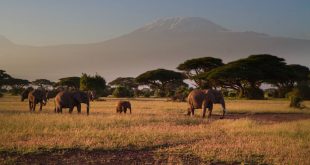
A new study published in the journal PLoS ONE has revealed that wild African elephants (Loxodonta africana) sleep an average of two hours a day and regularly go nearly two days without sleep. African elephants. Image credit: Ro Dobby. African elephants are iconic mammals of the continent and the largest …
Read More »Researchers Find Myopia-Causing Cells in Retina
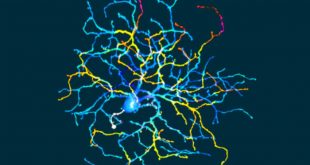
A team of researchers at Northwestern University has discovered a type of retinal ganglion cell that may cause myopia when it dysfunctions. The study is published in the journal Current Biology. This image shows an ON Delayed retinal ganglion cell. Image credit: Adam Mani Gregory W. Schwartz, Northwestern University. This …
Read More »Study: Brain Produces Fructose from Glucose
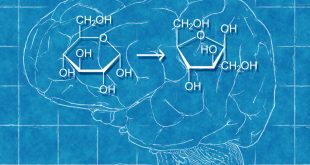
According to a new study by Yale School of Medicine researchers, fructose is converted in the human brain from glucose. The finding, published in the journal JCI Insight, raises questions about fructose’s effects on the brain and eating behavior. Fructose, a simple sugar, is generated in the human brain, according …
Read More »Researchers Find Antimicrobial Substances in Komodo Dragon Blood
A team of researchers at the College of Science at George Mason University has detected 48 antimicrobial peptides in the blood plasma of Komodo dragons (Varanus komodoensis), the largest living lizards. The discovery could lead to the development of new drugs capable of combating antibiotic-resistant bacteria. The Komodo dragon (Varanus …
Read More »Fetal Sex Plays Role in Immunity of Pregnant Women, New Study Finds
Women tend to react with stronger responses to immune challenges while pregnant with girls than with boys, a new study published in the journal Brain, Behavior and Immunity has found. The study by Mitchell et al shows baby’s sex is associated with pregnant women’s immune responses. A team of scientists …
Read More »