Planetary researchers have long thought that the dwarf planet Ceres may have a temporary, thin atmosphere (an exosphere), but mysteries lingered about its origin and why it’s not always present. Now, scientists from NASA’s Dawn mission suggest that the Cerean exosphere appears to be related to the behavior of the …
Read More »Galagoides kumbirensis: New Species of Dwarf Galago Discovered in Angola
An international group of primatologists has discovered a new primate, Galagoides kumbirensis (Angolan dwarf galago), with features not been seen by science before. The Angolan dwarf galago (Galagoides kumbirensis) prefers moist, tall forest, primary, and secondary and semiarid baobab savannah-woodland. Image credit: Elena Bersacola. Galagos, also known as bushbabies, are …
Read More »Astronomers switch on globe-spanning Event Horizon Telescope
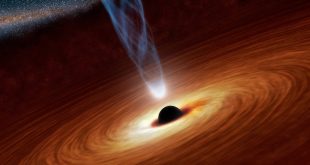
You’ve probably seen many images over the years that represent a black hole, but none of them are actually images of a real black hole (including the one above). They’re all artist’s renderings, or possibly a real image of the superheated gas around a black hole. Astronomers around the world …
Read More »Scientists find Earth-like planet with an atmosphere just 39 light-years away
If you’re looking for an Earth-like planet with an atmosphere, you need only go outside. Alternatively, you could travel some 39 light-years toward the constellation Vela. That’s where astronomers have discovered an exoplanet called GJ 1132b, which appears to have an atmosphere. While it might not be particularly hospitable to …
Read More »‘Sleep Gene’ Identified: FABP7
An international team of scientists from the United States and Japan has seen how a particular gene, called the fatty acid binding protein 7 (FABP7), is involved in the quality of sleep experienced by three different animals, including humans. The study was published in the April 5, 2017 issue of …
Read More »Honey Bees Have Better Vision Than Previously Thought
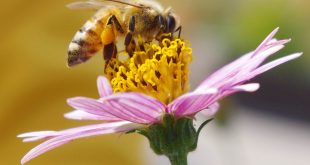
A new study by researchers at the University of Adelaide and Lund University that appears online today in the journal Scientific Reports suggests that honey bees have much better vision than previously thought. A western honey bee (Apis mellifera) in Nagakute, Aichi, Japan. Image credit: Emran Kassim / CC BY …
Read More »Unbalanced Skin Microbiome May Be Key to Acne Development, Study Finds
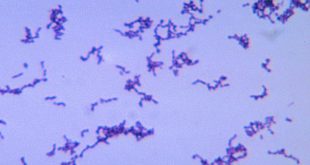
The overall balance of the bacteria on a person’s skin, rather than the presence or absence of a particular bacterial strain, appears to be an important factor for acne development and skin health, according to a study published recently in the journal Scientific Reports. This micrograph depicts the gram-positive bacterium …
Read More »Cassini Gets Ready for ‘Grand Finale’ Phase
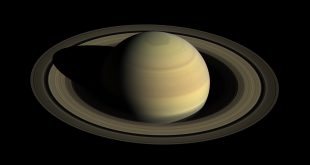
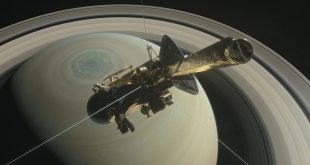
After 20 years in space and 13 years around Saturn, NASA’s Cassini spacecraft begins the final chapter of its remarkable story of exploration and discoveries: ‘Grand Finale.’ Between April and September 2017, the orbiter will dive 22 times through the unexplored space between Saturn and its innermost ring. On September …
Read More »Cassini probe set to begin ‘Grand Finale’ dive into Saturn’s atmosphere
We’ve enjoyed the benefits of having NASA’s Cassini spacecraft in orbit of Saturn for years. It’s almost like it’s always been there, looking down on one of the most awe-inspiring sights in the solar system. It only seems like forever because Cassini has sent back so much amazing stuff. Cassini began …
Read More »Meet Cave Loach, Europe’s First Cave Fish
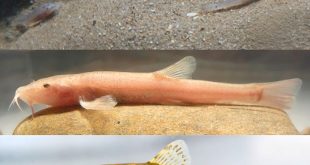
A team of scientists and cave divers has discovered and described the first European cave fish — a loach of the genus Barbatula. Loaches Barbatula sp. Top: two cave loaches in their natural habitat. Center: adult male loach with typical adaptations to living in caves: reduced eyes, enlarged barbels and …
Read More »