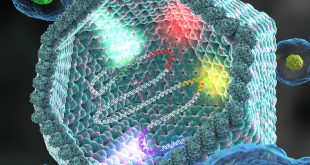
Viruses reproduce by infiltrating living cells and taking over the biological machinery inside. It’s an insidious process that can leave the host with a life-threatening illness, a mild fever, or no ill effects at all. Recent advances in medical science have allowed humans to combat viruses like never before, but …
Read More »Jupiter has a ‘Great Cold Spot’ to go with its red spot
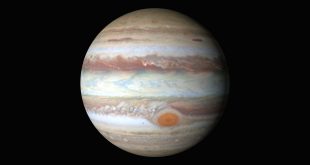
Jupiter is intensely studied because it’s the closest of our solar system’s gas giants, and it also happens to be the largest. Then there’s that entourage of moons, which are fascinating in their own right. Despite all the attention Jupiter has gotten over the years, it’s still finding ways to …
Read More »Teleocrater rhadinus: Early Dinosaur Relative Had Surprising Crocodile-Like Look
Paleontologists have long wondered what the earliest dinosaur relatives looked like. Most assumed that they would look like dwarf dinosaurs and walk on two legs. The discovery of Teleocrater rhadinus, however, has overturned popular predictions. A reconstruction of Teleocrater rhadinus feasting on a relative of early mammals. Image credit: Mark …
Read More »Cassini Finds New Evidence for Hydrothermal Processes in Enceladus’ Ice-Covered Ocean
During NASA’s Cassini spacecraft’s deepest-ever dive through Enceladus’ plume of gas and ice grains, researchers discovered molecular hydrogen in the material spewing from the icy moon. This discovery provides further evidence for hydrothermal activity in the ocean beneath Enceladus’ surface and heightens the possibility that the ocean could have conditions …
Read More »New composite image shows auroras on Uranus
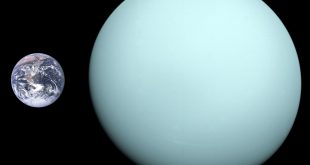
The gas giants Jupiter and Saturn have garnered more attention over the years because they’re closer, and let’s face it, they look cool. Uranus is easy to overlook out there in the outer solar system, but there are some newly released images from NASA and the ESA that might make …
Read More »Gray Hair Linked with Increased Risk of Coronary Artery Disease in Men
Gray hair has been linked with an increased risk of coronary artery disease in men, in a study presented this month at EuroPrevent 2017 in Malaga, Spain. According to Dr. Samuel and co-authors, patients at high risk of CAD should have regular check-ups to avoid early cardiac events by initiating …
Read More »Klosneuviruses: New Group of Giant Viruses Discovered
Researchers from Austria and the United States have identified a group of giant viruses — Klosneuviruses — that harbor components of many other viruses and proteins, and their analyses suggest that Klosneuviruses acquired the various components in an evolutionarily recent time frame, likely from, and as an adaptation to, their …
Read More »Astronomers spot a massive explosion from the collision of two stars
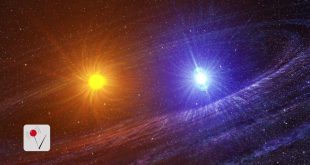
The Orion Molecular Cloud Complex is a group of nebulae and stellar nurseries positioned some 1,500 light years away from Earth. This is a place where new stars are born, but also apparently where they meet an early end. New observations from the Atacama Large Millimeter/submillimeter Array (ALMA) in Chile …
Read More »Researchers Identify ‘Night Owl’ Gene Variant
An international team of scientists led by the Rockefeller University has discovered that a variant of the human gene CRY1 (cryptochrome circadian clock 1) slows the internal biological clock, which dictates rhythmic behavior such as sleep/wake cycles. The study was published in the April 6 issue of the journal Cell. …
Read More »MAVEN Detects Metal Ions in Martian Atmosphere
NASA’s Mars Atmosphere and Volatile EvolutioN (MAVEN) mission has made the first detection of the continuous presence of iron, magnesium, and sodium ions in the electrically charged upper atmosphere (ionosphere) of the Red Planet. MAVEN is exploring Mars’ upper atmosphere in detail to understand how Mars changed from a wet …
Read More »