Science

Paleontologists Find Fossilized Feathers of Cretaceous Polar Dinosaurs and Birds

Paleontologists have discovered the fossilized feathers of dinosaurs and birds that lived 118 million years ago (Early Cretaceous epoch) in polar environment (around 70°S) in what is now southeastern Australia. A fossil feather from the Koonwarra Fossil Bed, Australia. Image credit: Kundrát et al, doi: 10.1016/j.gr.2019.10.004. Exceptionally preserved feathered dinosaur …

Read More »

Kuiper Belt Object Ultima Thule Has New Name: Arrokoth

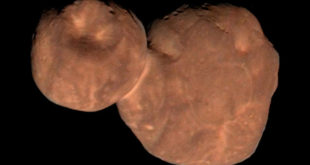
Ultima Thule (also known as 2014 MU69), the Kuiper Belt Object that was the target of the January 1, 2019 flyby by NASA’s New Horizons mission, has been officially named Arrokoth, a Native American term meaning ‘sky’ in the Powhatan/Algonquian language. This composite image of Ultima Thule was compiled from …

Read More »

New Martian Mystery: Oxygen

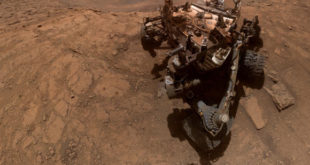
The Sample Analysis at Mars (SAM) instrument onboard NASA’s Curiosity rover has measured the seasonal changes in the gases that fill the air directly above the surface of Gale Crater, and noticed something baffling: oxygen behaves in a way that so far planetary scientists cannot explain through any known atmospheric …

Read More »

Silver-Backed Chevrotain Rediscovered in Vietnam

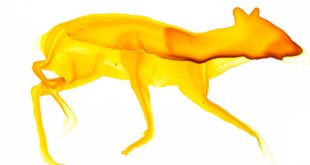
The silver-backed chevrotain (Tragulus versicolor), a deer-like species the size of a rabbit or small cat, has been rediscovered by an international team of researchers from Global Wildlife Conservation and elsewhere. Also called the Vietnamese mouse-deer, the ungulate (hoofed animal) had not been seen in Vietnam since 1990. The rediscovery …

Read More »

Experimental Vaccine Protects Mice from Staphylococcus aureus

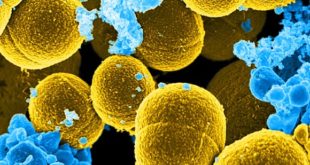
The new biofilm-specific vaccine, developed by researchers from the University of Maryland-Baltimore, Northern Arizona University and the University of Zurich, was more than 80% effective in protecting mice from succumbing to Staphylococcus aureus infection. This digitally-colorized scanning electron microscopic (SEM) image depicts a number of mustard-colored, spheroid-shaped Staphylococcus aureus bacteria …

Read More »

Study: Anemonefish Can See Ultraviolet Light

The Great Barrier Reef anemonefish (Amphiprion akindynos) can see ultraviolet light and may use it as a ‘secret channel’ to find both friends and food, according to new research. The Great Barrier Reef anemonefish (Amphiprion akindynos) at Siaes Tunnel, Palau. Image credit: Lux Tonnerre / CC BY 2.0. Anemonefish, also …

Read More »

Paleontologists Find 170-Million-Year-Old Giant Pliosaur Fossil

Paleontologists in Switzerland have unearthed an exceptionally rare fossil jaw of an ancient creature known as a pliosaur. Life reconstruction of the Arisdorf pliosaur with a diver for scale. Image credit: Joschua Knüppe. Pliosaurs were a type of short-necked plesiosaur: marine reptiles built for speed compared to their long-necked cousins. …

Read More »
Bizwhiznetwork Consultation