Parkinson’s disease is a brain disorder that can lead to shaking, stiffness and difficulty with walking, balance and coordination. Dementia with Lewy bodies, one of the most common forms of dementia, causes problems with thinking, behavior, mood, and movement. Professor M. Maral Mouradian of the Rutgers Robert Wood Johnson Medical …
Read More »Study: Newborns with Vitamin D Deficiency Have Higher Risk of Later Schizophrenia
A study published in the December 6, 2018 issue of the journal Scientific Reports found newborns with vitamin D deficiency had a 44% increased risk of being diagnosed with schizophrenia as adults compared to those with normal vitamin D levels. Newborns with vitamin D deficiency have an increased risk of …
Read More »Using Gold Nanoparticles to Rapidly Detect Cancer DNA
Using as little as 1 picogram of purified DNA sample (think 2.5 trillion times lighter than a penny), scientists at the University of Brisbane have developed a method that permits the swift detection of cancer DNA in a patient sample of cell-free DNA, which circulates systemically. These researchers took advantage …
Read More »Scientists Turn Wasp Venom Into Potentially Groundbreaking Antibiotic
Decades of antibiotic overuse have bread new generations of super-bacteria that can go on living even when hit with the most potent drugs we’ve got. Scientists are scrambling to discover new antibiotic compounds, but it’s slow going. Oh, there are plenty of chemicals that will kill bacteria, but many of …
Read More »Lifelong Aerobic Exercise May Help Keep Body Young, Says New Study
In an analysis of septuagenarians who have been exercising for decades, researchers from Ball State University found that they have heart and lung capacities and muscle fitness like healthy people in their early 40’s. The findings were published in the Journal of Applied Physiology. Exercising on a regular basis over …
Read More »Study: Adult Hearts Do Not Contain Cardiac Stem Cells
Adult cardiac stem cells don’t exist, according to a new study in mice by researchers from the Hubrecht Institute, the Amsterdam University Medical Center, the École Normale Supérieure de Lyon and the Francis Crick Institute London. Part of the heart wall of the murine heart after myocardial infarction; visible are …
Read More »Mammalian Analog of Honeybee Royal Jelly Protein Keeps Embryonic Stem Cells Youthful
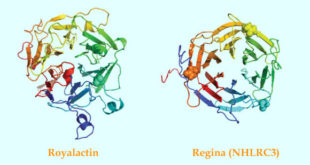
A mammalian protein similar in structure to the active component of royal jelly — the queen-maker for the honeybee (Apis mellifera) — functions as kind of a fountain of youth for embryonic stem cells, according to a new study published in the journal Nature Communications. The structure of royalactin (left) …
Read More »Essential Oils from Garlic, Other Herbs Show Strong Activity against Persister Lyme Disease Bacteria
Lyme disease, which is caused by Borrelia burgdorferi bacteria, is the most common vector borne-disease in the United States with about 300,000 cases a year. While the majority of the Lyme disease patients can be cured with the standard 2–4 weeks antibiotic monotherapy with doxycycline or amoxicillin or cefuroxime, about …
Read More »You Can Inherit Mitochondrial DNA From Your Father After All
Your cells need energy to function, and they get most of that energy from mitochondria. Naturally, scientists have taken great interest in studying this cellular organelle, but we’re still encountering surprises. We’ve long believed that mitochondrial DNA is only passed down by mothers. A team of researchers from the US, …
Read More »Newly Discovered Human Monoclonal Antibody Protects Mice from West Nile Virus
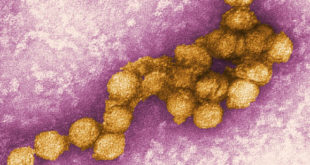
A research team led by Vanderbilt University Medical Center scientists has isolated a human monoclonal antibody that can ‘neutralize’ the West Nile virus. This is a digitally-colorized transmission electron microscopic (TEM) image of the West Nile virus. Image credit: Cynthia Goldsmith / P.E. Rollin / CDC. West Nile virus (WNV), …
Read More »