Genetics

Warming Climate

A team of researchers from McMaster University and elsewhere has carried out a phylogeographic study of the extinct American mastodon (Mammut americanum) based on 35 newly-sequenced mitochondrial genomes. Their findings suggest that American mastodons repeatedly expanded into northern latitudes in response to interglacial warming. Artistic rendering of American mastodons (Mammut …

Read More »

History of Penguins

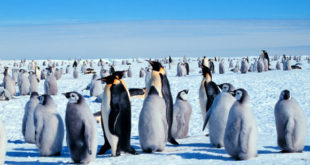
Genetic Researchers Reconstruct Evolutionary In a new study, an international team of scientists used 22 newly-sequenced genomes from 18 extant species of penguins to reconstruct the history of their diversification and adaptation. The authors found that ancient penguins diverged in the early Miocene epoch in Australia and New Zealand and …

Read More »

Cave Lion Identified

An international team of researchers led by the Swedish Centre for Palaeogenetics has analyzed 31 mitochondrial genome sequences from the cave lion (Panthera spelaea) and found that this extinct mega-carnivore existed as at least two subspecies during the Pleistocene. The scientists have also confirmed that the cave lion and the …

Read More »

Woolly Rhinoceros

An international team of researchers has sequenced and analyzed a complete nuclear genome and 14 mitochondrial genomes from the extinct woolly rhinoceros (Coelodonta antiquitatis) and found that its population remained stable and diverse until only a few thousand years before it disappeared from Siberia, when temperatures likely rose too high …

Read More »

Scientists Rename Genes

So Excel Won’t Reformat Them as Dates Microsoft Excel is an incredibly powerful program that’s just as essential in a laboratory as it is in the average office. However, scientists have had just about enough of Excel renaming genes as if they were dates. It didn’t seem likely anyone would …

Read More »

Genomeo of Tuatara

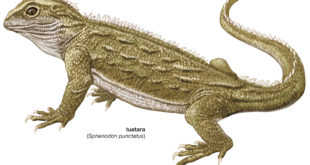
An international team of researchers has sequenced and analyzed the genome of the tuatara (Sphenodon punctatus), the only living member of the reptilian order Rhynchocephalia, once widespread across the ancient supercontinent Gondwana. The tuatara (Sphenodon punctatus). Imager credit: Michael Hamilton, Digitaltrails / CC BY-SA 3.0. The tuatara is an iconic …

Read More »

Tiny Giant Sunfish

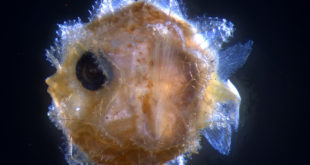
An international team of marine biologists has for the first time genetically identified a larva of the bump-head sunfish (Mola alexandrini). A larval sunfish (Mola sp.) collected off New South Wales coast, Australia. Image credit: Kerryn Parkinson / Australian Museum. The bump-head sunfish, also known as the southern sunfish or …

Read More »

Transparent Squid

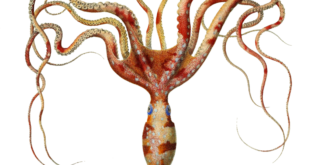
A team of researchers from the Marine Biological Laboratory, Harvard University and St. Mary’s College of Maryland has demonstrated efficient gene knockout in the longfin inshore squid (Doryteuthis pealeii) using CRISPR-Cas9 gene-editing system. Crawford et al demonstrated that squid genes can be efficiently disrupted using the CRISPR-Cas9 system. Image credit: …

Read More »

Four-Stranded DNA

Researchers Observe Formation of Four-Stranded DNA in Living Human Cells DNA usually forms the classic double helix shape — two strands wound around each other. Several other structures have been formed in the lab, but this does not necessarily mean they form within living cells. Quadruple helix structures, called DNA …

Read More »

Smallpox Virus in Viking Age

Diverse Strains of Smallpox Virus Were Widespread in Viking Age, New Study Shows Smallpox, caused by the variola virus, is one of the most devastating human diseases. Smallpox killed millions of people but drove Edward Jenner’s invention of vaccination, which eventually led to the annihilation of the virus, declared in …

Read More »
Bizwhiznetwork Consultation