A new analysis of Chusang, an archeological site on the high-altitude Tibetan Plateau, suggests that permanent residents may have set up camp thousands of years sooner than previously thought. These fossilized human footprints near Chusang, Tibet, were made between 13,000-7,400 years ago, according to a new analysis. Image credit: Mark …
Read More »Study: Ancient Inhabitants of Chaco Canyon Likely Relied on Imported Corn
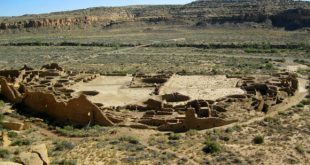
According to a new study published in the Journal of Archaeological Science: Reports, the ancient inhabitants of Chaco Canyon likely had to import corn to feed the multitudes residing there. Pueblo Bonito, the largest great house in Chaco Canyon, New Mexico. Image credit: National Register of Historic Places / CC …
Read More »Israeli Archaeologists Find Fragment of 2,100-Year-Old Engraved Stone Bowl
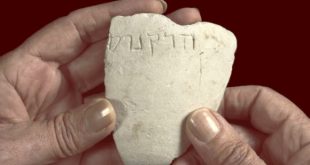
Archaeologists digging at a site in the City of David, in the Jerusalem Walls National Park, have found a fragment of a rare ancient bowl. The fragment of the 2,100-year-old stone bowl, which is engraved with the name Hyrcanus. Image credit: Clara Amit / Israel Antiquities Authority. The bowl fragment …
Read More »Israeli Archaeologists Find Unique 3,800-Year-Old Ceramic Vessel
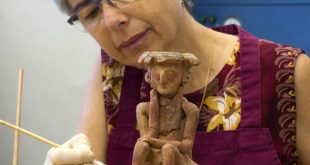
Israel Antiquities Authority archaeologists working at Yehud in the Central District of Israel have uncovered an ancient ceramic jug, about 3,800 years old. The 3,800-year-old jug, which was broken when it was found, being restored in the laboratories of the Israel Antiquities Authority in Jerusalem, Israel. Image credit: Clara Amit …
Read More »Archaeologists Find Compelling Evidence for New Pharaonic Tombs in Egypt
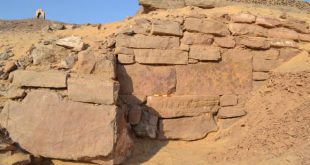
Archaeologists from the University of Birmingham and the Egypt Exploration Society (EES) Qubbet el-Hawa Research Project (QHRP) yesterday announced the discovery of a 6.5-foot (2 m) high ancient encroachment wall in the northern part of the West Aswan cemetery at Qubbet el-Hawa, Aswan. The newly-discovered ancient wall at Qubbet el-Hawa, …
Read More »Oldest Evidence for Plant Processing in Pottery Found
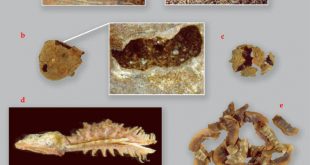
An international team of archaeologists has discovered the earliest evidence of humans processing plants for food found anywhere in the world. The findings are reported in the journal Nature Plants. Exceptionally preserved archaeobotanical remains from the Takarkori rock shelter, Tadrart Acacus, Libya, dating from 7500 to 4200 BC: a – …
Read More »Researchers Obtain First Reliable Radiocarbon Dates for Australian Aboriginal Rock Art
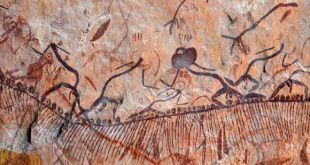
A novel technique developed by a team of researchers in Australia has made it possible to produce some of the first reliable radiocarbon dates for Australian rock art. Aboriginal rock art from western Arnhem Land depicts style known as Northern Running Figures. Image credit: Tristen Jones. “Indigenous Australian rock art …
Read More »Ancient Tools, Bones Reveal Humans Arrived in South America Earlier than Thought
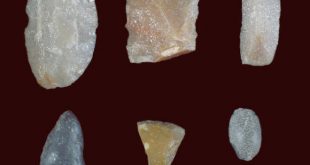
Early Homo sapiens arrived in South America earlier than believed, new research shows. Sample of stone tools (scrapers, flakes and bipolar cobble) found at the Arroyo Seco 2 site. Image credit: G.G. Politis et al. The conclusion comes from the analysis of ancient tools and bones from a variety of …
Read More »Israeli Archaeologists Unearth First-Temple Period Gate-Shrine
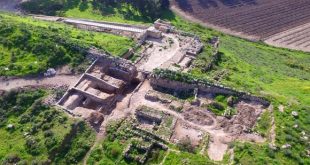
Archaeologists excavating at the site of the ancient Biblical city of Tel Lachish have unearthed a gate-shrine dating to the 8th century BC (First Temple period). Lachish gate-shrine. Image credit: Guy Fitoussi / Israel Antiquities Authority. The ancient gate-shrine is about 80 x 80 feet (24.5 x 24.5 m), making …
Read More »Archaeologists Virtually Recreate House of Caecilius Iucundus in Pompeii
An international team of researchers led by Lund University archaeologists has virtually reconstructed a large house of the Pompeian banker Lucius Caecilius Iucundus. A research paper about the virtual reconstruction is published in the journal SCIRES-IT. Peristylium (open courtyard) of the House of Caecilius Iucundus. Image credit: Emanuel Demetrescu et …
Read More »