Fenchol, a natural compound commonly present in some plants including basil (Ocimum basilicum), decreases Alzheimer’s disease pathology by activating the free fatty acid receptor 2 (FFAR2) signaling, according to new research published in the journal Frontiers in Aging Neuroscience. Fenchol, a plant-derived compound that gives basil its aromatic scent, can …
Read More »Discovered in Japan
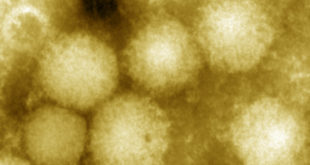
Scientists have isolated a new orthonairovirus from two patients showing acute febrile illness with thrombocytopenia and leukopenia after tick bite in Hokkaido, Japan. Transmission electron microscopy of YEZV particles negatively stained with 2% phosphotungstic acid. Image credit: Kodama et al., doi: 10.1038/s41467-021-25857-0. Orthonairoviruses are tick-borne viruses in the genus Orthonairovirus, …
Read More »What is a Neural Net?
Photo: Mike MacKenzie, FlickrAs Moore’s Law approaches its endgame, the technosphere has looked to different and more diverse approaches to computing. In order to continue to increase the computational power of our systems, we can’t just depend on driving clock speeds higher and higher, nor can we continue making transistors …
Read More »NASA Boeing Starliner
NASA and Boeing have provided an update on the status of the Starliner spacecraft, which has been on the verge of launching several times now. The vessel was supposed to head off to the International Space Station (ISS) in August, but a last-minute issue with the craft’s fuel valves caused …
Read More »Oxygenic Photosynthesis
Using a new gene-analyzing technique, researchers from MIT and elsewhere have found that all extant species of cyanobacteria can be traced back to a common ancestor that evolved around 2.9 billion years ago. They’ve also found that the ancestors of cyanobacteria branched off from other bacteria around 3.4 billion years …
Read More »One Million Years Ago
Paleontologists have found a million-year-old hippo tooth at the site of Westbury Cave in Somerset, England. This fossil constitutes the earliest bona fide record of Hippopotamus in the United Kingdom. The left first upper molar of Hippopotamus antiquus from the Early Pleistocene Siliceous Member in Westbury Cave, Somerset, England. Image …
Read More »Dinosaur Unearthed in Wales
Paleontologists have described a new genus and species of coelophysoid theropod dinosaur from the Late Triassic deposits of Pant-y-ffynnon in southern Wales. Life reconstruction of Pendraig milnerae among the fissures of Pant-y-ffynnon and three individuals of the rhynchocephalian lepidosaur Clevosaurus cambrica during the Late Triassic epoch. Image credit: James Robbins. …
Read More »Microsoft Kinect Returns
It has been more than a decade since Microsoft unveiled the Kinect, a motion-sensing gaming peripheral for the Xbox 360 and Xbox One. Microsoft tried and tried to make Kinect happen, even going so far as to bundle it with the Xbox One, but it ultimately failed to capture gamers’ …
Read More »Spider Silk Myth
(Photo: Michael Podger/Unsplash)Spider silk has long been said to have antibacterial properties. The ancient Greeks and Romans supposedly used the silk when treating flesh wounds, and some recent studies report antimicrobial activity (AMA) on spider silk, leading many cultures and social circles today to believe the sticky substance is a …
Read More »Darwin’s Ground Sloth
New research published in the journal Scientific Reports provides the first direct evidence of omnivory in an ancient sloth species. Reconstruction of the Darwin’s ground sloth (Mylodon darwinii) feeding on the carcass of the hoofed native herbivore Macrauchenia. These extinct mammals roamed the Pleistocene landscape of Patagonia and other parts …
Read More »