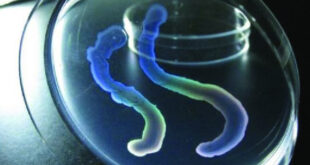
Biologists have isolated a new type of multicellular bacterium, named Jeongeupia sacculi HS-3, from an underground stream in northern Kyushu Island, Japan. Jeongeupia sacculi HS-3 represents an unusual form of bacterial multicellularity — an organism that can exist in dense, filamentous multicellular structures and clusters of coccobacillus (short rod-shaped) daughter …
Read More »Newly Australian Native Bee
Curtin University researcher Kit Prendergast has named the new bee species Leioproctus zephyr, after her pet dog Zephyr after noticing a protruding part of the bee’s face looked similar to a dog’s snout. Leioproctus zephyr. Image credit: Kit Prendergast. The newly-described bee species belongs to Leioproctus, a species-rich genus in …
Read More »Steam App Updated
Valve has offered mobile apps on Android and iOS since the early days of the smartphone era, and it’s barely improved the apps since then. That’s changing at last with a complete revamp for the Steam Mobile app. The new version, now live on both platforms, has a more functional …
Read More »Space Telescope Funded
Move over, James Webb: humanity is about to get another eye in the sky. There’s just been a new space telescope announced, named TOLIMAN, and it’s already got funding from the Breakthrough project. The telescope is designed around two things: its target, and the exotic optics the telescope will use. …
Read More »Jurassic Global Warming
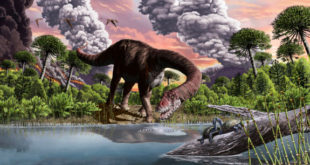
Paleontologists in Argentina have identified a new species of eusauropod (true sauropod) dinosaur that lived 179 million years ago, just after the mysterious disappearance of non-eusauropod sauropodomorphs. Life reconstruction of Bagualia alba. Image credit: Jorge González. The newly-identified dinosaur lived in what is now Patagonia, Argentina during the Early Jurassic …
Read More »Newly Discovered Earth-Like Planet May Have the Right Conditions for Life
With every new exoplanet discovery, we seem to get that much closer to finding evidence of extraterrestrial life. A new exoplanet identified in orbit of a nearby star could be the best place to look yet. Astronomers have confirmed a star 39 light-years away plays host to a planet that …
Read More »Newly discovered rock formations could be fossils from earliest living organisms
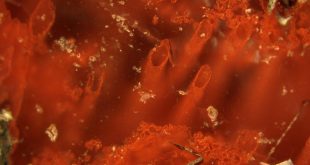
Earth came into being roughly 4.5 billion years ago, and a new discovery in Canada indicates life developed not long after. Scientists studying ancient rock formations in Quebec have identified microscopic structures in the rock that they believe are the fossilized remains of microorganisms that lived on Earth between 3.7 …
Read More »Newly-granted Google patent sheds light on how the search engine sees entities
Anyone who knows me knows that I’m a big fan of reading Google patents — or, when I’m feeling lazy, reading Bill Slawski’s analysis of them over on his blog, SEO By The Sea. I also have a particular interest in those involving entities, as they are (to me at least) …
Read More »Newly Discovered Antibody ‘Neutralizes’ Zika Virus, Shows Mouse Study
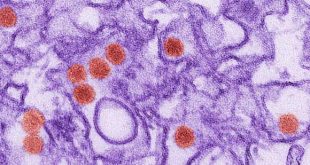
A research team led by Vanderbilt University Medical Center scientist Prof. James Crowe, Jr., has isolated a human monoclonal antibody that in a mouse model ‘markedly reduced’ infection by the Zika virus. Transmission electron micrograph of Zika virus. Virus particles are 40 nm in diameter, with an outer envelope, and …
Read More »Newly Identified Antibody Neutralizes 98% of HIV Strains
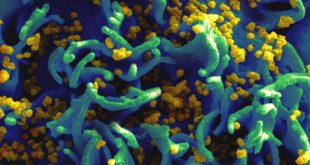
A team of researchers led by Dr. Mark Connors of NIH’s National Institute of Allergy and Infectious Diseases has identified an antibody from an HIV-infected person that neutralized 98% of HIV strains tested, including 16 of 20 strains resistant to other members of its class. Scanning electron micrograph of HIV …
Read More »