A fossil crustacean, discovered by a University of Leicester-led team of paleontologists, has been named Cascolus ravitis in honor of the naturalist and broadcaster Sir David Attenborough, in celebration of his 90th birthday. Cascolus ravitis. Image credit: David J. Siveter et al. Cascolus ravitis, a member of the stem-group of …
Read More »Fossil Study Rewrites Dinomyidae Family Tree
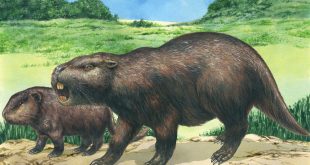
Adult and juvenile fossil specimens of Isostylomys laurdillardi, a giant rodent that lived in South America between 9 and 6.8 million years ago (Miocene epoch), have been found by paleontologists, raising questions about classification within the rodent family Dinomyidae. Isostylomys laurdillardi. Image credit: Andres Rinderknecht et al. Dr. Andres Rinderknecht …
Read More »Triassic Fossil Reveals First Evidence of Live Birth in Archosauromorphs
The first ever evidence of live birth in a group of animals previously thought only to lay eggs has been discovered by an international team of paleontologists from China, the United States, Australia and UK. Artist’s reconstruction of Dinocephalosaurus showing the rough position of the embryo within the mother. Image …
Read More »Ordovician Fossil Sheds New Light on Early Evolution of Mollusks
Paleontologists have unearthed the remains of a previously unknown slug-like creature that lived during the Early Ordovician epoch, 478 million years ago. The discovery, reported in the journal Nature, sheds new light on the earliest stages in the evolution of mollusks, a group of invertebrates that includes clams, snails and …
Read More »Paleontologists Find Collagen in 80-Million-Year-Old Brachylophosaurus Fossil
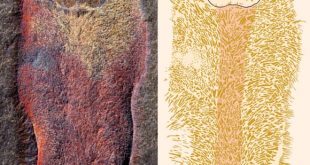
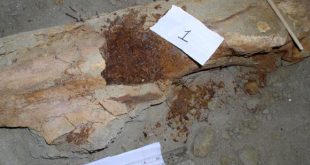
A team of paleontologists led by North Carolina State University researchers has isolated collagen peptides from the fossilized femur of Brachylophosaurus canadensis, a duck-billed dinosaur (hadrosaur) that lived what is now Montana around 80 million years ago. The research is published in the Journal of Proteome Research. This is a …
Read More »Dwykaselachus oosthuizeni: Permian Fossil Reveals Origins of Chimaeras
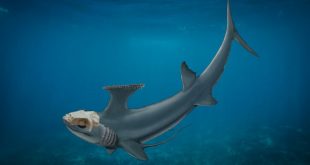
CT scans of the fossilized skull of Dwykaselachus oosthuizeni — a shark-like fish that lived during the Permian period, around 280 million years ago — reveal the origin of chimaeras, a group of cartilaginous fish related to sharks. The research appears today in the journal Nature. Reconstruction of the early …
Read More »Jeddaherdan aleadonta: New Fossil is Africa’s Oldest Iguanian Lizard
A 90-million-year-old fossil discovered in Morocco is the oldest known iguanian lizard from Africa, which could help tell the story of lizard evolution in southern continents, paleontologists say. An artistic life reconstruction of Jeddaherdan aleadonta. Image credit: Jorge González. Iguania (chameleons, agamas, iguanas and New World lizards) is one of …
Read More »